
Finding an effective way to heat your space quickly can be a challenge, especially in colder months. Portable heaters are a convenient solution, offering targeted warmth and versatility without high energy costs.
Portable Heater Heat Settings, Auto Shut-Off and Size
| Product | Best for | Heat Settings | Auto Shut-Off | Size | Price |
|---|---|---|---|---|---|
| LuxeBul Ultrasoft Electric Blanket Throw | Best Overall | 9 | 0–9 hours | Throw | Check price |
| Bedsure Heated Blanket Throw with Preheat | Best Budget | 6 | 8 hours (default) | 50″x60″ | Check price |
| EHEYCIGA Electric Heated Full Blanket | Best for Bed Use | 9 | 10 hours | Full and up | Check price |
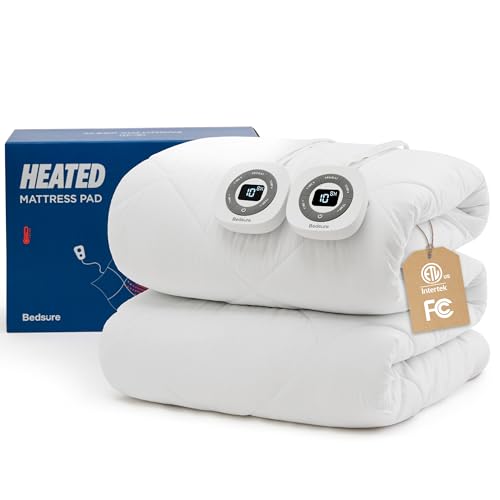
| Bedsure Heated Mattress Pad Queen | Best for Full Bed Warmth | 10 | 8 hours | Queen | Check price |
| RONGTAI Women’s Plush Hooded Robe | Best Wearable Warmth | — | — | Wearable robe | Check price |



Best Portable Heaters for Quick Warmth
LuxeBul Ultrasoft Electric Blanket Throw
- Heat Settings9
- Auto Shut-Off0–9 hours
- SizeThrow
- Material460 GSM faux rabbit fur
- CertificationETL
- Heats evenly and quickly
- Soft, thick faux fur for comfort
- Multiple heat levels and timer
- Safety features with ETL certification
- Not a standalone room heater, only warms the user
Bedsure Heated Blanket Throw with Preheat
- Heat Settings6
- Auto Shut-Off8 hours (default)
- Size50″x60″
- Power100W
- CertificationETL, FCC
- Fast, even heating with preheat
- Soft flannel and sherpa sides
- Multiple timer and heat settings
- Energy-efficient at 100W
- Limited heat levels compared to premium models
- Smaller coverage than a mattress pad
EHEYCIGA Electric Heated Full Blanket
- Heat Settings9
- Auto Shut-Off10 hours
- SizeFull and up
- Temperature Range85°F–110°F
- CertificationETL
- Fast, even heat coverage
- 9 adjustable heat levels
- Dual controllers for larger sizes
- Machine washable with detachable controller
- Heavier and bulkier than throws
- Higher power use than smaller blankets
Bedsure Heated Mattress Pad Queen
- Heat Settings10
- Auto Shut-Off8 hours
- SizeQueen
- Material100% polyester
- CertificationETL, FCC
- Fast and consistent heating
- Dual controls for couples
- Fits deep mattresses
- Soft, brushed fabric for comfort
- Requires mattress fit and setup
- Not portable like a throw or blanket
RONGTAI Women’s Plush Hooded Robe
- MaterialPlush fabric
- UseWearable robe
- Heat SourceBody heat retention
- PurposeIndoor comfort
- Fast warming plush fabric
- Comfortable hooded design
- Good for all-day wear indoors
- Soft and cozy texture
- Not electrically heated
- No adjustable heat levels
How to Choose the Right Portable Heater
Start by measuring the space you want to heat. A small bedroom or office needs a different heater than a large living room. Portable heaters are designed to quickly warm one room, so consider the heater’s heat output in watts or BTUs relative to your room size.
Fan heaters heat a room fast by blowing warm air directly into the space. They typically reach full warmth within minutes, making them ideal for quick heat. If your portable heater is plugged in but not powering up, check the outlet, the plug, and the heater’s power switch before troubleshooting further.
Look for adjustable heat settings to control comfort and save energy. Many models offer two or three heat levels, letting you balance warmth and power use. Safety certifications such as UL, ETL or CSA ensure the heater meets minimum safety standards. Features like tip-over protection and automatic shut-off reduce risks.
Energy efficiency affects running costs. Electric heaters convert nearly all electricity to heat, but models with adjustable thermostats avoid wasting power. Running a 1,500-watt heater for 8 hours at 17 cents per kWh costs about $2.04 daily. Heated blankets, like the LuxeBul Ultrasoft Electric Blanket Throw, use less power for personal warmth and cost less to run.
| Appliance | Watts | Per hour | Per day (8 h) | Per month (30 days) |
|---|---|---|---|---|
| 1,500 W space heater | 1,500 W | 26¢ | $2.04 | $61.20 |
| Heated blanket | 100 W | 1.7¢ | 14¢ | $4.08 |
Sizing and Heat Output
Match heater output to room size for effective warmth. Heaters list output in watts or BTUs; 1 watt equals about 3.41 BTUs. A 1,500-watt heater produces roughly 5,115 BTUs, enough for a room up to 150 square feet with average insulation.
Insulation quality changes how much heat your space needs. Well-insulated rooms hold heat longer, so a smaller heater can suffice. Poorly insulated rooms with drafts or single-pane windows need a higher output or additional heating sources.
Room layout and airflow affect heat distribution. Open floor plans lose heat faster than closed rooms. Heaters that warm air quickly, like fan-forced models, perform better in spaces with good airflow. Position your heater near where you spend time to feel warmth fastest.
| Heater Output (Watts) | Approximate Coverage (sq ft) |
|---|---|
| 750 | 75-100 |
| 1,500 | 100-150 |
| 2,000 | 150-200 |
Safety and Certification Standards
Look for portable heaters with safety certifications like ETL or UL. These marks mean the heater meets strict electrical and fire safety standards. Avoid models without these certifications, as they may pose risks.
Essential safety features include auto shut-off and overheat protection. Auto shut-off turns the heater off if it tips over or overheats. Overheat protection prevents internal components from reaching unsafe temperatures. These features reduce fire hazards and protect your home.
Use heaters exactly as the manufacturer directs. Plug them directly into a wall outlet, never an extension cord or power strip. Keep at least 3 feet of clearance around the heater to combustible materials like curtains and furniture.
Understanding Running Costs of Portable Heaters
Calculate running costs by multiplying the heater’s wattage by hours used and the local electricity rate. For example, a 1,500-watt heater running 8 hours daily at $0.17 per kWh costs about $2.04 per day (1,500 ÷ 1,000 × 8 × 0.17).
| Appliance | Watts | Per hour | Per day (8 h) | Per month (30 days) |
|---|---|---|---|---|
| 1,500 W space heater | 1,500 W | 26¢ | $2.04 | $61.20 |
| Heated blanket | 100 W | 1.7¢ | 14¢ | $4.08 |
Energy-saving features like adjustable thermostats and timers reduce costs by avoiding overheating and unnecessary run time. Models with eco or low-power modes consume less electricity while maintaining comfort.
Heated blankets typically use about 100 watts, costing a fraction of a space heater’s daily use. Use a heated blanket for personal warmth to save on electric bills compared to heating an entire room.
For larger rooms, a 1,500-watt heater is common but costs add up quickly if run continuously. Consider running the heater only when needed and combining it with draft-proofing to keep the heat in.
Understanding running costs helps pick the right heater and use it efficiently. See our guides on the best heaters for a fast morning warm-up and quick living room heat for more tailored advice.
Explore the best heaters for a fast morning warm-up and best heaters for fast warming up your living room to find models that balance speed, safety, and cost.
Common Mistakes When Using Portable Heaters
Not all heaters suit every space. For example, a small ceramic heater works best in bathrooms or quick-use spots, while oil-filled radiators are better for bedrooms or longer sessions. Using a heater too large or too small wastes energy and can be unsafe.
Avoid running heaters unattended or while sleeping unless the model is specifically designed and certified for that use. Heaters with tip-over and overheat protection add safety but don’t eliminate all risks. Follow the manufacturer’s instructions closely.
Heaters meant for outdoor or construction use are not safe indoors. They can emit carbon monoxide and require ventilation. Choose only indoor-rated models for indoor use and keep a working CO alarm nearby when using fuel-burning heaters.
If you want help selecting the right heater for the size and purpose of your room, see our guide on how to choose the right portable heater. For fast morning warmth, check our picks for the best heaters for a fast morning warm-up.
Frequently Asked Questions
What type of heater warms up a room the fastest?
Can I use a portable heater in a bathroom?
How much does it cost to run a portable heater?
What safety features should I look for in a portable heater?
How do I maintain my portable heater for longevity?
Are there energy-efficient options for portable heaters?
We go through portable heater issues step by step in a separate article.
We go through room-to-room heating solutions step by step in a separate article.
