
Modern homes with sweeping glass facades are stunning. They blur the lines between indoors and out, flooding spaces with natural light. But all that glass presents a unique thermal challenge. It can turn your beautiful sanctuary into an energy sieve, with high bills and uncomfortable drafts. The good news? You don’t have to choose between aesthetics and efficiency.
Effective insulating for these homes requires a layered approach. It’s about addressing air leaks, improving the glass itself, and using smart interior treatments. We’ll break down the science, the solutions, and the cost-benefit realities. Let’s turn those beautiful windows from a weakness into a well-managed asset.
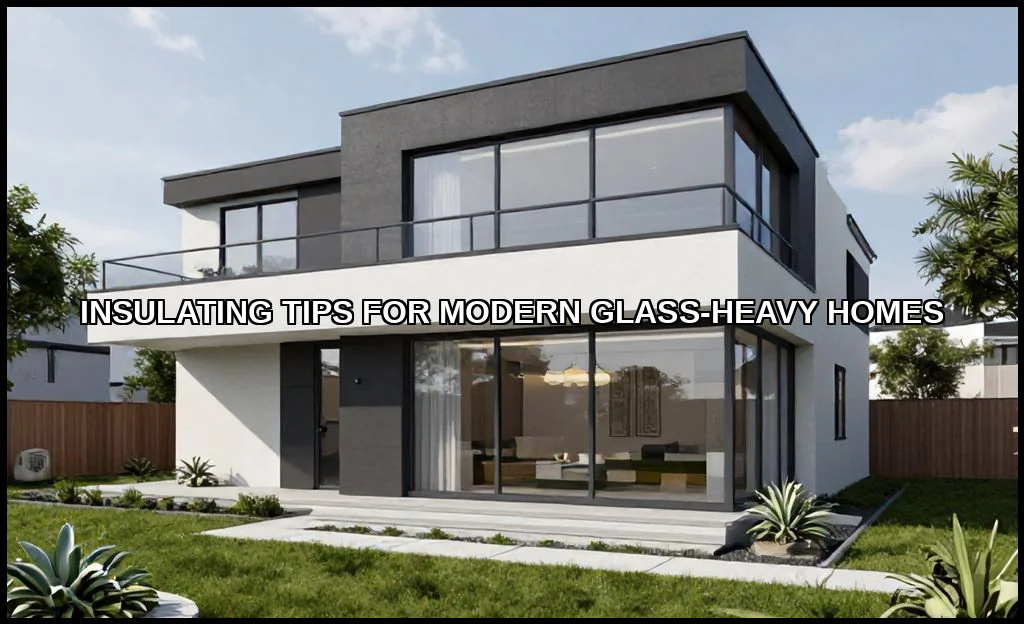
The Thermal Weaknesses of Glass in Modern Design
Glass is a poor insulator compared to solid walls. Its thermal performance is measured by U-valuethe rate of heat loss. A lower U-value is better. Single-pane glass has a high U-value, meaning heat escapes easily. This is the core challenge for glass house insulation. We go through tips for window insulation step by step in a separate article.
Another critical concept is thermal bridging. This occurs when conductive materials, like window frames, create a direct path for heat to flow out. In a wall of windows, the frames themselves can be a major source of thermal bridging. Then there’s solar heat gain. It’s a double-edged sword: welcome in winter, but a major cooling burden in summer.
Addressing these issues is key to reduce heat loss through windows. The goal is to improve the effective R-value (the measure of thermal resistance) of your entire glazed assembly. Improving window R-value isn’t just about the pane; it’s the seals, the frame, and the installation.
Passive Insulation: Seals, Weatherstripping & Draft Proofing
Your first line of defense is stopping air movement. Drafts can account for a significant portion of heat loss, undermining even the best glass. This is the most cost-effective step you can take.
Draft proofing involves inspecting and sealing gaps around window sashes and frames. Feel for cold air on a windy day. Listen for whistles. Check the meeting rails of sliding doors.
Essential Draft-Proofing Steps:
- Apply high-quality weatherstripping foam tape to movable sashes.
- Use silicone caulk to seal stationary gaps between the frame and wall.
- Install door sweeps or thresholds on glass patio doors.
- Consider a removable interior insulation kit for seasonal use. For this, many professionals recommend the Frost King V739H shrink film kit. It creates a still air pocket over the window, acting as a temporary secondary glazing layer.
These simple fixes are foundational, similar to the principles of basic insulating in any home. They prepare the canvas for more advanced solutions.
Active Solutions: Upgrading the Glass Itself
When passive measures aren’t enough, you modify the glass. This is where technology makes a dramatic difference. The options range from films to full unit replacements. It helps to understand how to warm a room with north-facing windows before spending anything.
Window Film: A Versatile Retrofit
Applying a high-performance window film is a popular mid-tier solution. It’s less disruptive than replacing entire units. Modern films are virtually invisible and can address multiple issues.
Does window film really help with insulation? Yes, but context matters. Insulating films primarily work by creating a micro-thin metallic or ceramic layer that reflects interior heat back into the room, improving U-value. They can also manage solar heat gain. For how to insulate large picture windows without reconstruction, film is a strong contender.
The Power of Advanced Glazing
For new builds or major renovations, the glazing unit is your primary weapon. Double glazing (insulated glass units, or IGUs) is the standard, trapping inert gas like argon between panes to drastically reduce U-value.
The real magic often comes from a low-E coating. This microscopically thin, metallic coating is applied to the glass. It allows visible light to pass through but reflects long-wave infrared heat. In winter, it reflects interior heat back inside. In summer, it can reflect exterior solar heat away. Pairing double glazing with a low-E coating is the hallmark of truly energy efficient windows.
For extreme climates, triple glazing or even vacuum glazing are the pinnacle, offering wall-like insulation values.
Strategic Interior Treatments: Curtains, Blinds & Shutters
Interior treatments add a flexible, decorative insulation layer. They allow you to adapt to daily and seasonal changes. The U.S. Department of Energy has an excellent authority guide on this topic that’s worth reviewing.
The key is creating a sealed air pocket. A tight-fitting cellular shade or a heavy curtain with a sealed pelmet (valance) traps still air next to the glass. This significantly reduce[s] heat loss through windows at night.
Choosing the best window treatments for insulation in winter:
| Treatment | Insulation Mechanism | Best For |
|---|---|---|
| Insulated Cellular Shades | Honeycomb design traps air; side tracks eliminate gaps. | Modern, clean looks; excellent year-round performance. |
| Thermal Curtains | Multi-layered fabric with tight weave; must be floor-to-ceiling, wall-to-wall. | Traditional spaces; dramatic visual impact. |
| Interior Shutters | Solid wood or composite creates a physical barrier; tight fit reduces drafts. | Architectural integration; durability. |
Remember, the cost of insulating floor-to-ceiling windows with custom treatments can be high. But the comfort payoff and energy savings are often substantial.
Long-Term Planning: Design & Professional Insight
If you’re designing a new glass-heavy home or planning a major retrofit, think holistically from the start. Orientation matters. South-facing glass (in the Northern Hemisphere) maximizes passive solar gain in winter.
Specify thermally broken window frames to minimize thermal bridging. Consider the entire assembly’s performance, not just the center-of-glass U-value. A professional energy assessment can model solar heat gain and pinpoint the most cost-effective upgrades for your specific climate and design.
This strategic approach is as important for a sprawling modern home as it is for specialized spaces like converted loft bedrooms, where thermal dynamics are equally challenging.
Cost vs. Benefit: Making Smart Choices
Not every solution makes sense for every home. Draft sealing offers the fastest return on investment. Window films provide a good balance of cost and performance for existing windows. Full window replacement is a major investment but offers the greatest long-term performance and often increases property value.
Prioritize based on your climate, budget, and the specific weaknesses of your home. Sometimes, a combination of medium-cost solutionslike film plus high-quality cellular shadesoutperforms one expensive fix.
Living in a glass-heavy home doesn’t mean resigning yourself to thermal discomfort. Start with the basics: hunt down and seal every draft. Then, layer on solutions that match your budget and goalswhether it’s a clever film, intelligent window treatments, or planning for future glazing upgrades. Each layer adds resilience and efficiency. Your modern home can be both a light-filled marvel and a cozy, energy-efficient retreat. The tools and knowledge are all right here.
