
Your converted attic should be a cozy retreat, not a chilly afterthought. Yet, many find their beautiful new space is unusable in winter, plagued by drafts and stubborn cold spots. The problem isn’t your heating; it’s the attic’s unique battle with physics. Warm air rises, but in an attic, it often escapes right through the roof if the space isn’t properly sealed and insulated.
Addressing this isn’t about cranking the thermostat. It’s a systematic approach to building a thermal envelope. For supplemental, targeted warmth, a smart heater can be a game-changer. Many homeowners find units like the Dreo Smart Wall heater ideal for quickly taking the edge off a cold attic room while the primary systems work.
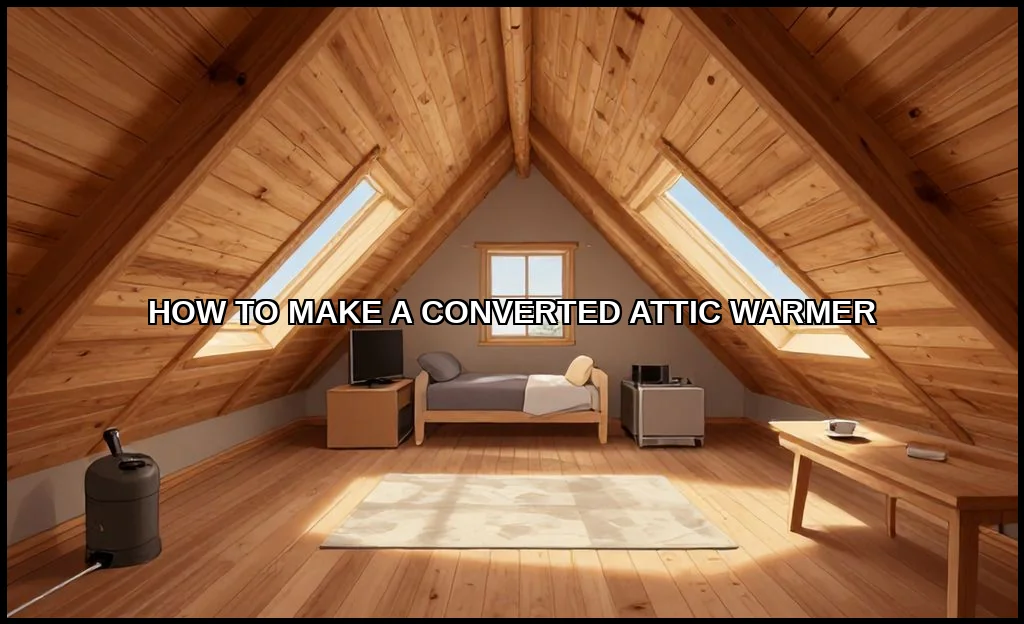
Why Your Converted Attic is Always Cold
Heat loss in attics is dramatic. Think of your house as a warm balloon. Heat naturally rises and seeks out every tiny gap to escape. Your attic sits at the very top of this stack, making it the primary exit point. The issue is often a combination of poor insulation, rampant air leaks, and what’s known as a thermal bridgea structural element, like a wood rafter, that conducts heat directly outside.
Many conversions focus on aesthetics first, treating insulation as an afterthought. This leads directly to a drafty attic and high energy bills. The key is to stop treating the attic as a separate room and start treating it as an integral, properly conditioned part of your home’s shell. We go through keeping utility rooms warm step by step in a separate article.
Building Your Thermal Fortress: Insulation Materials & Zones
This is your first and most critical line of defense. The goal is to achieve a high R-valuea measure of thermal resistanceconsistently across every surface. Where you insulate is just as important as what you use.
Choosing the Right Insulation
Your choice depends on access, budget, and existing structure.
- Spray Foam: Excellent for air sealing and high R-value per inch. Perfect for irregular rafter bays. It’s a premium solution that addresses two problems at once.
- Rigid Foam Boards: Great for adding continuous insulation over rafters to break thermal bridges. Often used in combination with other materials.
- Batt Insulation (Fiberglass/Mineral Wool): Cost-effective but requires meticulous installation. Any compression or gaps drastically reduce its effectiveness. Vital for how to insulate a finished attic floor if there’s an unused crawl space below.
- Blown-In Cellulose/Loose-Fill: Ideal for topping up existing insulation in hard-to-reach attic eaves or floor cavities.
Key Installation Zones
Don’t just insulate between the rafters. You must create a complete envelope.
- The Roof Slope (Between Rafters): This is your main barrier. Ensure full, gap-free coverage. Leave an air gap between the insulation and roof deck for ventilation if using batts.
- Knee Walls: Those short walls in a finished attic are massive sources of heat loss attic. Insulate them thoroughly, and don’t forget the space behind them.
- The Attic Floor: If parts of your attic are unfinished storage, insulating the floor between conditioned and unconditioned space is a crucial step.
- Dormer Cheeks & Gable Ends: Every vertical surface exposed to the outside needs attention.
The Silent Energy Thief: Air Sealing & Draft Prevention
You can have R-50 insulation, but if air flows through it, you have R-0. Air sealing is the unsung hero of attic thermal efficiency. Drafts aren’t just uncomfortable; they carry moisture that can lead to mold and rot.
Common leak points in a converted attic are numerous: gaps around light fixtures, wiring and plumbing penetrations, top plates of walls, and where the ceiling meets the wall. Use caulk for small cracks and gaps. For larger holes around pipes or wires, expanding foam is your best friend. This process is fundamental to prevent warm air from simply bypassing your expensive insulation.
Supplemental Heating: Options for Consistent Warmth
Even with great insulation, attics can need a heating boost. The best way to heat a converted attic bedroom often involves a dedicated system.
- Electric Baseboard Heaters: Simple to install, offer zone control. Can be costly to run if used as the primary heat source for a poorly insulated space.
- Ductless Mini-Split Heat Pump: The gold standard. Provides highly efficient heating and cooling. Excellent for maintaining a stable attic temperature year-round.
- Extended Ductwork from Main System: Feasible if your furnace has capacity. Often challenging due to long duct runs and static pressure issues.
- Smart Space Heaters: As mentioned, products like the Dreo Smart Wall are perfect for supplemental use. Schedule them to warm the room before you arrive, all from your phone.
For cheap ways to make an attic warmer in the short term, focus on sealing obvious drafts and using heavy curtains on dormer windows before investing in major systems. Before you buy anything, it is worth looking at strategies for tricky insulation spots.
If you want to make your floor warmer without replacing it, add area rugs or carpet runners to trap heat and reduce cold from tile or hardwood. Use a low-profile electric radiant mat under rugs if allowed by the floor type. Avoid covering vents or blocking airflow. These options add warmth quickly and without major renovation, ideal for rented houses or temporary solutions.
Ventilation & Moisture: The Balancing Act
Wait, you just spent all this time sealing it up, and now we talk about ventilation? Absolutely. A sealed attic needs controlled ventilation to manage moisture. You breathe, shower, and cookall adding water vapor to your home’s air. That warm, moist air will find its way into your attic.
Without proper ventilation, condensation forms on the cold underside of the roof deck. This leads to mold, mildew, and structural damage. The solution is a balanced system of intake (usually at the eaves) and exhaust (at the ridge) vents. This creates a passive flow that whisks moisture away while preserving your thermal envelope. It’s a non-negotiable part of any attic conversion heating plan.
For a deep dive on insulation standards and best practices, the Department of Energy’s authority guide is an invaluable resource.
Turning a Cold Attic into a Cozy Sanctuary
So, why is my attic conversion so cold in winter? It’s rarely one reason. It’s a chain of thermal failures. The fix is methodical: insulate comprehensively, seal relentlessly, ventilate intelligently, and heat strategically. Start with an audit. Feel for drafts on a windy day. Check insulation depth.
Prioritize air sealing and topping up insulationthese give the highest return on investment. Then, evaluate your attic heating needs. The goal of finished attic warmth is achieved by creating a continuous, durable thermal boundary. It turns your attic from a seasonal space into a comfortable, energy-efficient part of your home, every day of the year. No more sweaters indoors.
