You’ve gathered everyone for a holiday meal, but halfway through dinner, your guests are reaching for their sweaters. The thermostat says 70, but your feet are cold and the warmth seems to be hovering near the ceiling. Sound familiar? Heating a large dining room evenly is a common frustration, especially in homes with high ceilings or older layouts. The good news is you don’t necessarily need a brand-new system. Often, the solution lies in optimizing what you already have and implementing a few smart strategies.
For immediate relief in a specific seating area, a focused supplemental heater can be a game-changer. Many find that a compact, oscillating model like the DREO Space Heater provides a quick burst of targeted warmth exactly where you need it. This is a practical stopgap while you work on the systemic fixes for long-term, even heat distribution.

Why Large Dining Rooms are Hard to Heat
The challenge usually boils down to physics. Warm air is less dense than cold air, so it naturally rises. In a room with high ceilings or a large, open volume, this creates thermal stratificationa significant temperature difference between the floor and ceiling. Your heating system works hard to warm the entire air column, but the heat you pay for collects uselessly overhead. Combine this with common issues like poor insulation, leaky windows, or a heating system designed for smaller spaces, and you get persistent cold spots. It’s the reason you might ask, “why is my dining room always colder than the rest of the house?”
Core Strategy 1: Optimize Your Existing Heating System
Before considering major upgrades, ensure your current setup is running at peak efficiency. A well-tuned system is the foundation of even heating. For the detail, see our notes on efficient heating solutions for split-level living rooms.
Maximize Your Forced Air or Hydronic System
Your main system is either a forced air system (using ducts and vents) or a hydronic heating system (using a boiler and radiators/radiant floors). Both need regular attention.
- Forced Air Systems: Check that all supply vents (registers) in the dining room are fully open and unobstructed by furniture. Ensure return air vents are not blocked, as this restricts airflow. Simple HVAC maintenance, like changing filters monthly during peak season, is critical for airflow and efficiency.
- Hydronic Systems (Boilers & Radiators): Bleed your radiators at the start of the season to remove air pockets that prevent hot water from circulating fully. Consider adding a radiator reflector behind units on exterior walls. This thin, reflective panel bounces heat back into the room instead of letting it escape into the wall.
If your dining room is at the end of a long duct run, it might not get enough airflow. A register booster fan can be installed inside the vent to actively pull more warm air into the room. For radiators, small radator booster fans sit underneath to push warm air away from the unit and into the room’s center, combating the natural tendency of heat to rise straight up.
Take Control with Your Thermostat
Your room thermostat is the brain of the operation. If it’s in a hallway or a sunny spot, it can misread the home’s true temperature. Make sure your dining room’s thermostat (or the one controlling it) is on an interior wall, away from drafts and direct heat sources. Upgrading to a smart thermostat like those from Nest or Hive offers finer control. You can set schedules to warm the dining room before use and allow it to cool down afterward, saving energy. Some models even learn your habits and can report on system performance.
Core Strategy 2: Improve Air Circulation and Combat Stratification
This is your most powerful tool against cold floors and warm ceilings. You need to actively mix the air in the room.
Harness Your Ceiling Fan
Your ceiling fan isn’t just for summer. In winter, reverse the ceiling fan direction so it runs clockwise on a low speed. This creates an updraft that pulls cool air up and pushes the stratified warm air at the ceiling down and outward along the walls. This simple trick can make the room feel several degrees warmer without touching the thermostat.
Use Strategic Fan Placement
Small, portable fans can work wonders. Place a box fan on the floor in a corner, angled slightly upward toward the center of the room. It will help disrupt the cold air layer at floor level. The goal is gentle air movement, not a wind tunnel. We go through even heating for large spaces step by step in a separate article.
For a more integrated solution, consider a heater with a wide oscillation feature to distribute warmth across a broad area, which you can read about in our guide to using an oscillating heater for an evenly heated family room.
Core Strategy 3: Reduce Heat Loss and Retain Warmth
It’s far cheaper to keep heat in than to generate more. Stop the leaks first.
Conduct Thorough Draft Proofing
On a windy day, carefully feel around windows, doors, electrical outlets on exterior walls, and where the floor meets the baseboard. Seal gaps with weatherstripping, caulk, or foam sealant. Don’t forget the attic access if it’s in or near the dining room. This is the single most cost-effective step for reducing heat loss.
Invest in Thermal Curtains
Windows are major sources of heat loss. Heavy, lined thermal curtains act as an insulating barrier. Keep them open during sunny days to capture free solar heat, and close them tightly at night to trap warmth inside. For large patio doors or windows, this can dramatically reduce the chill.
Advanced Solutions: Zoning and Supplemental Heating
If optimization isn’t enough, these solutions offer more permanent, customized comfort.
Implement a Zoning System
Zoning allows you to control the temperature of your dining room independently from other areas. For forced air systems, this involves installing motorized dampers in the ductwork controlled by a separate thermostat. For hydronic systems, zoning valves on the heating lines do the same job. This way, you’re not overheating the entire house to warm one large room. It’s an investment that pays off in both comfort and energy savings.
Choose the Right Supplemental Heat
When you only need to heat the dining room for a few hours, a supplemental heater is the cheapest way to evenly heat a big dining area for that period. Choose based on your needs:
| Heater Type | Best For | Considerations |
|---|---|---|
| Oil-Filled Radiators | Silent, sustained heat; good for longer periods. | Slow to warm up but provide steady, even warmth. |
| Infrared Heaters | Instant, spot heating of people and objects. | Heats surfaces, not the air, making them feel warm quickly. |
| Ceramic Tower Heaters (with fans) | Quickly raising air temperature in a zone. | Often include oscillation and thermostats for even coverage. |
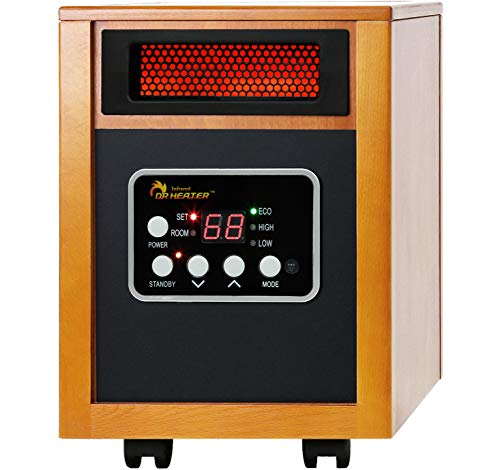
Infrared heaters are particularly effective for creating a “sunshine” effect in a seating area. Learn more about their application in our article on using an infrared quartz heater for large room supplemental heating.
Consider a Ductless Heat Pump
For a large, frequently used dining room, a ductless mini-split heat pump is a premium solution. It provides highly efficient both heating and cooling, is controlled by its own remote, and can be mounted high on a wall to distribute air evenly across the room. It directly addresses the core problem of temperature stratification.
For a comprehensive overview of all home heating system types and their efficiencies, the U.S. Department of Energy offers an excellent resource on home heating systems.
Putting It All Together: Your Action Plan
- Start with the easy wins. Reverse your ceiling fan. Do a draft proofing sweep. Close your thermal curtains at night.
- Tune up your main system. Change the filter, bleed radiators, and ensure all vents are open. Consider a register booster or radiator booster fan if needed.
- Use smart, temporary heat. For gatherings, deploy a supplemental heater like an oil-filled radiator or infrared model to take the chill off the area where people are sitting.
- Plan for permanent upgrades. If the room is chronically problematic, evaluate the cost/benefit of a zoning system, a smart thermostat, or a ductless heat pump.
Heating a large space evenly isn’t about cranking the thermostat. It’s about intelligent management of air, heat, and insulation. You can conquer those cold spots. Start with one strategy this weekendmaybe just flipping that ceiling fan switchand feel the difference it makes. Your next dinner party will be remembered for the conversation, not the chill.