
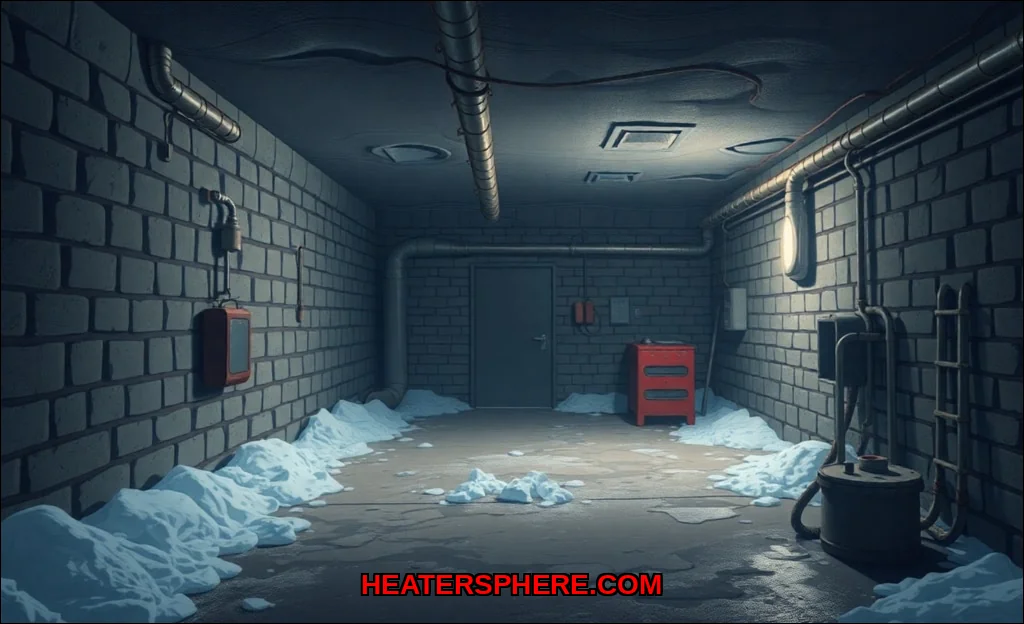
Your basement doesnt have to feel like a walk-in freezer. You can heat a cold basement cheaply by focusing on three things: stopping drafts, adding strategic insulation, and choosing the right heating source. No expensive renovations required.
Most basements are cold because of concrete slabs, uninsulated walls, and leaky windows. But with a few smart upgrades, you can make the space comfortable without breaking the bank. Lets walk through exactly what works.
Why Basements Get Cold and What You Can Do About It
Basements are essentially a hole in the ground. Concrete is a terrible insulator. It soaks up cold from the surrounding soil and radiates it into your space. Add in uninsulated rim joists and drafty windows, and you have a recipe for a freezing room.
But here’s the good news: you don’t need to spend thousands to fix this. The physics are simple. You need to stop heat loss and add heat efficiently. That’s it.
The cheapest way to start? Change your mindset. You’re not trying to heat the entire basement to 72F like the upstairs. You’re aiming for a comfortable 60-65F. Every degree you lower your target saves about 3% on heating costs.
Seal the Gaps: The First Step to a Warmer Basement
Before you buy any heater, you must stop the leaks. Heating a drafty basement is like trying to fill a bucket with a hole in it. You’ll waste money and still feel cold.
Where to Look for Drafts
Start with the rim joist area. That’s where your floor joists sit on the foundation wall. It’s the number one source of cold air in basements.
Check these spots:
– Rim joist gaps between wood and concrete
– Window frames and sills
– Door sweeps at the bottom of basement doors
– Gaps around pipes and wires entering the basement
– The top of the foundation wall where it meets the floor above
Quick Sealing Fixes Under $50
Air sealing is your cheapest weapon. Here’s what to buy:
– Caulk for small cracks (under inch) about $5 per tube
– Spray foam for larger gaps about $8 per can
– Weatherstripping for doors and windows about $10 per roll
– Door draft stopper for the bottom of doors about $15
Spend an afternoon sealing every gap you can find. This alone can raise your basement temperature by 5-8F. No joke.
Insulate on a Budget: Walls, Ceiling, and Floor
Once the drafts are sealed, insulation keeps the heat you generate where it belongs.
Insulate the Rim Joists First
This is the highest-impact, lowest-cost insulation project. Cut rigid foam board to fit between your floor joists. Seal the edges with spray foam. Cover with caulk or tape for an airtight seal. Cost: about $50-100 for an average basement.
Basement Wall Insulation Options
If your walls are exposed, you have cheap options:
– Rigid foam board Best for concrete walls. Glue it directly to the wall. Cost: about $1 per square foot.
– Fiberglass batts Only use if you have a wood frame wall. Cost: about $0.50 per square foot.
– Reflective foil insulation Works well if you have a radiant barrier. Cost: about $0.70 per square foot.
Don’t insulate walls that are below grade and damp. Fix moisture issues first, or you’ll trap water against your foundation.
Insulate Basement Ceiling
If you don’t want to insulate walls, insulate basement ceiling instead. This traps heat in the basement and prevents it from rising into the first floor. Use unfaced fiberglass batts between the floor joists. Cost: about $0.40 per square foot.
Basement Floor Insulation
Concrete slab is a giant heat sink. But subfloor insulation is expensive. Cheaper alternative: use thick rugs and carpet remnants. A -inch foam pad under a rug makes a noticeable difference. You can also lay down interlocking foam mats (the kind used for gyms). Cost: about $1-2 per square foot.
Low-Cost Heating Solutions That Actually Work
Now that your basement is sealed and insulated, it’s time to add heat. Here are the cheapest options ranked by cost-effectiveness.
1. A High-Efficiency Space Heater
A good space heater is your best bet for spot heating. But not all space heaters are equal. Look for one with a thermostat, timer, and safety features. Ceramic heaters are more efficient than old-school coil heaters.
For a large cold basement, you need something with enough power. Many professionals recommend the DREO Space Heater for its combination of power, quiet operation, and precise temperature control. It has a built-in thermostat that cycles on and off, saving electricity compared to heaters that run constantly.
When comparing space heater efficiency, look for Energy Star certification. This means the heater meets strict efficiency standards.
2. Zone Heating Strategy
Don’t try to heat the whole basement evenly. Use zone heating instead. Heat only the area you’re using. Close doors to unused rooms. Use a small heater for a workshop corner and a larger one for a living area.
This strategy can cut your heating costs by 30-50% compared to heating the entire basement.
3. Radiant Floor Heating (DIY Version)
Full radiant floor heating is expensive. But there’s a cheap hack: electric radiant floor mats. You install them under tile or laminate flooring in one small area. A 30-square-foot mat costs about $150 and uses less electricity than a space heater.
This is perfect for a bathroom or small home office corner.
4. Heat Pump Water Heater (Dual Purpose)
This is a bigger investment ($800-1500) but it pays for itself. A heat pump water heater pulls heat from the basement air to heat water. It cools the basement slightly but uses 60% less electricity than a standard water heater.
If you need a new water heater anyway, this is a smart move. Check your hot water system service guide to see if your current setup is compatible.
5. Thermal Mass Heating
Concrete has high thermal mass. It absorbs heat slowly and releases it slowly. Use this to your advantage. If you run a heater during the day, the concrete floor absorbs heat and releases it at night.
Place a heater near a concrete wall or floor. Let it run for 4-6 hours. The thermal mass will keep the space warm for hours after the heater turns off.
Smart Habits to Keep Your Basement Warm for Less
Your habits matter just as much as your equipment. Here’s how to maximize every dollar you spend on heating.
Use Thermal Curtains
Thermal curtains on basement windows block cold drafts and reflect heat back into the room. They cost about $20-30 per window and pay for themselves in one season.
Reduce Humidity
Damp air feels colder than dry air. Use a dehumidifier to keep basement humidity below 50%. This makes the space feel 5F warmer without any extra heat.
Run the Heater on a Timer
Don’t run a space heater 24/7. Use a programmable timer plug ($10-15). Set it to turn on 30 minutes before you use the basement and turn off 30 minutes after you leave.
Best Heater for Cold Basement: Comparison Table
| Heater Type | Best For | Cost to Run (per hour) | Safety |
|---|---|---|---|
| Ceramic space heater | Small to medium rooms | $0.15-0.25 | High (auto shutoff, cool touch) |
| Oil-filled radiator | Long, steady heat | $0.12-0.20 | Very high (no exposed coils) |
| Infrared heater | Spot heating a person | $0.10-0.18 | High |
| Heat pump water heater | Whole basement + hot water | $0.05-0.10 | Very high |
Window Film Insulation for Drafty Windows
If your basement windows are old and leaky, window film insulation is a cheap fix. It’s a plastic sheet that you tape over the window frame. Use a hair dryer to shrink it tight. It creates an invisible barrier that stops drafts and reduces heat loss by 30%.
Cost: about $10 per window. Installation takes 10 minutes. It’s one of the best cheap basement heating ideas you can try today.
Zone Heating with Multiple Small Heaters
Instead of one big heater, use two or three small ones. Place one near your desk, one near the couch, and one near the workshop bench. This zone heating approach uses less total power and keeps you comfortable where it matters.
How to Heat an Uninsulated Basement Cheaply
If you can’t insulate right now, focus on air sealing and spot heating. Use a high-efficiency space heater directed at your body. Wear warm clothing. Use a heated blanket or heating pad for a home office.
The key is to heat yourself, not the whole room. A heated vest ($30) uses almost no electricity and keeps you warm all day.
What Is the Cheapest Way to Heat a Cold Basement?
The absolute cheapest method: air sealing + a small ceramic space heater with a thermostat. Total cost: under $100. Monthly operating cost: $20-40 depending on usage.
If you have a little more budget, add basement floor insulation with rugs and subfloor insulation with foam mats. This combination costs about $200 and cuts heating costs by 30%.
How to Keep Basement Warm Without Heating System
If you don’t want to use any heater, try these passive methods:
– Open basement doors to let warm air sink down from upstairs
– Run a ceiling fan in reverse to push warm air down
– Use thermal mass by letting sunlight hit concrete through windows
– Add thick rugs to insulate the floor
– Seal every crack and gap
These methods won’t make a freezing basement warm, but they can raise the temperature by 5-10F.
For a Better Setup
If you’re planning to use your basement as a living space, you need a more comprehensive approach. Check out this guide on how to heat a cold basement living space for permanent solutions.
And if your basement has a TV room, be careful not to overheat electronics. Learn how to heat a cold TV room without overheating for tips on balancing comfort and equipment safety.
Final Tips for Maximum Savings
– Use a programmable thermostat on your space heater
– Keep basement doors closed to prevent heat loss upstairs
– Wear slippers and a sweater instead of turning up the heat
– Run the heater only when you’re in the basement
– Combine multiple small heaters for zone heating
You don’t need to spend thousands to make your basement comfortable. Start with air sealing. Add insulation where you can. Choose an efficient space heater. Use smart habits to maximize every watt.
Your basement can be warm and cozy without wrecking your utility bill. Just follow these steps, and you’ll be comfortable down there all winter long.
