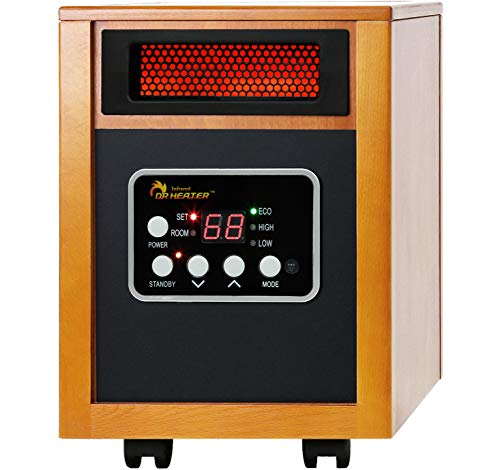
The search for a heater that costs less to run often starts with comparing technologies: ceramic versus infrared, oil-filled versus fan. But a 1,500-watt ceramic heater and a 1,500-watt oil-filled radiator draw the same power when their heating elements are on. The bill impact comes from runtime, not the label on the box.
Three factors determine what you actually pay: the wattage setting you choose, how often the heater cycles off because its thermostat is satisfied, and how much heat escapes from the room while the heater works. Understanding how each heater type manages these factors lets you pick the one that costs less in your specific situation.
How Different Heater Types Impact Your Electric Bill
Nearly all plug-in electric heaters draw 1,500 watts at maximum heat, the limit of a standard 15-amp household circuit, so a ceramic heater costs exactly the same per hour as an oil-filled radiator or infrared panel when both run at full power. What changes your bill is how long each type needs to run to keep you warm—some heaters cycle off frequently because they retain heat, while others run continuously to maintain temperature.
The formula is straightforward: divide watts by 1,000, multiply by the hours you run it, then multiply by your electricity rate. A 1,500-watt heater running for eight hours at the U.S. average rate of $0.17 per kWh costs $2.04 for that period. Cut the runtime in half and you cut the cost in half, which is why thermostat behavior and heat retention matter more than the technology inside the heater.
| Appliance | Watts | Per hour | Per day (8 h) | Per month (30 days) |
|---|---|---|---|---|
| 1,500 W heater, high setting | 1,500 W | 26¢ | $2.04 | $61.20 |
| 750 W heater, low setting | 750 W | 13¢ | $1.02 | $30.60 |
| Oil-filled radiator cycling 50% of time | 750 W | 13¢ | $1.02 | $30.60 |
Heater type influences runtime, not power draw. An oil-filled radiator heats sealed oil that continues radiating warmth after the element switches off, so the thermostat cycles less often. A ceramic fan heater stops producing heat the moment it clicks off, so it runs longer to maintain the same room temperature. Both pull 1,500 watts when the heating element is on; the oil-filled model simply spends more time with the element off.
Infrared heaters also draw 1,500 watts, but they heat objects and people directly rather than warming air, so you feel warmth sooner and may set a lower thermostat target. The wattage never changes—what changes is the strategy. To find the most energy-efficient heater types for lower bills, look at how each design manages its on-off cycle and whether it matches the space you need to heat.
What Each Heater Type Actually Does With Electricity
Electric heaters convert electricity to heat at close to 100% efficiency, so the difference between types is not how much electricity becomes heat but where that heat goes and how quickly it disperses. A ceramic heater sends current through a ceramic heating element, then uses a fan to blow room air over the hot surface. You feel warmth within seconds, but the fan draws power continuously and the heat dissipates the moment you switch it off.
Oil-filled radiators work differently. Electricity heats a sealed reservoir of diathermic oil that circulates through vertical fins, and that oil holds thermal energy long after the heating element cycles off. The fins keep radiating warmth into the room, so the thermostat cuts power more often and the heater spends less time drawing electricity. The tradeoff is a slower warm-up—metal and oil take longer to heat than a bare ceramic element.
Infrared heaters use quartz tubes or carbon fiber panels that glow when current passes through them, emitting infrared radiation that travels through air without warming it and heats only the objects and skin it strikes. You feel the warmth immediately, the way sunlight warms your face on a cold day, but the air temperature may stay lower. That makes infrared efficient for heating a person in a large space, less so for raising the temperature of an entire room.
Fan heaters are the simplest design: electricity heats a metal coil, and a fan pushes air across it. They cost less to buy and warm a small room quickly, but the coil cools in seconds once the power cuts, so the heater runs almost constantly to maintain temperature. Convection heaters without fans rely on natural air circulation—warm air rises from the heating element and cooler air flows in to replace it—so they operate more quietly but take longer to heat a room and still cycle frequently because they lack thermal mass.
| Heater Type | Heat Mechanism | Delivery Method | Cycling Behavior |
|---|---|---|---|
| Ceramic | Ceramic element + fan | Forced air over element | Runs frequently; stops heating instantly when off |
| Oil-filled radiator | Sealed oil reservoir | Radiant heat from fins | Cycles off often; continues radiating after element stops |
| Infrared | Quartz or carbon element | Direct infrared radiation | Steady draw; heats objects, not air |
| Fan heater | Metal coil + fan | Forced air over coil | Runs almost constantly; no heat retention |
| Convection (no fan) | Heating element alone | Natural air circulation | Frequent cycling; slower warmth |

Why Oil-Filled Radiators Often Cost Less to Run Than Ceramic or Fan Heaters
An oil-filled radiator heats thermal oil that continues radiating warmth after the heating element cycles off. That stored heat means the unit can stay off longer between cycles while the room temperature holds steady. A ceramic or fan heater stops producing heat the instant it cycles off, so it must turn back on sooner to maintain the same temperature.
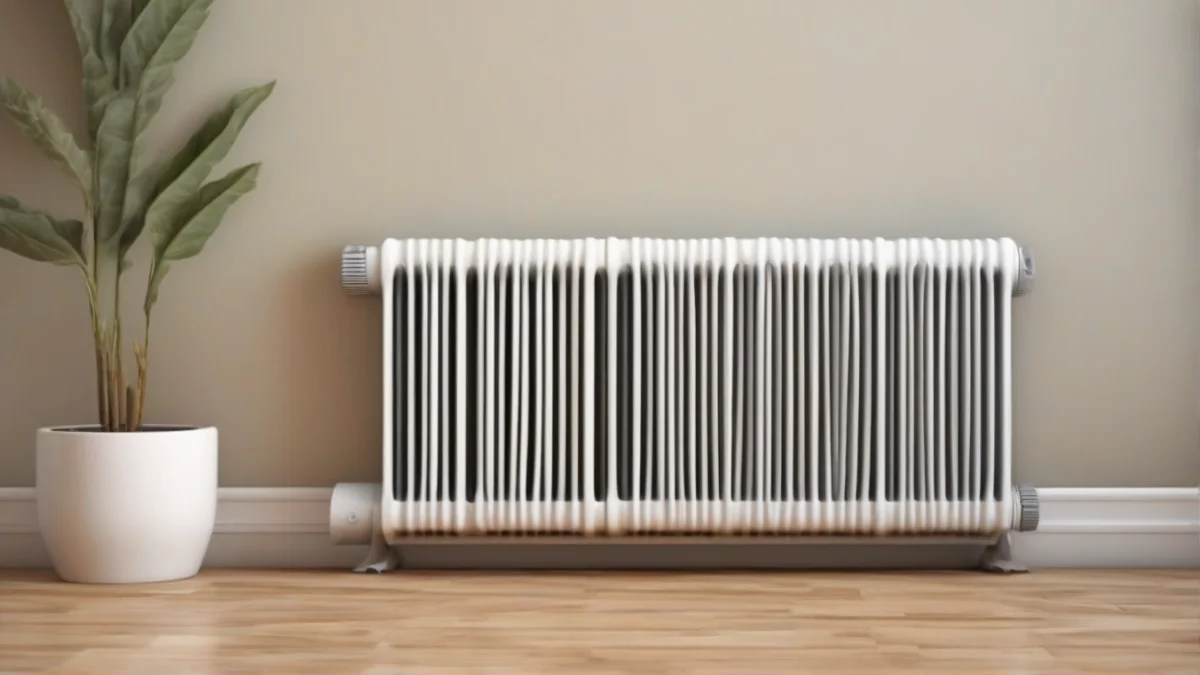
In practice, an oil-filled radiator maintaining 68°F in a typical bedroom runs about 50 to 60 percent of the time. A fan heater in the same room runs 80 to 90 percent of the time because it has no thermal mass to coast on. Over an eight-hour night, that difference cuts active runtime by two to three hours.
| Appliance | Watts | Per hour | Per day (8 h) | Per month (30 days) |
|---|---|---|---|---|
| Oil-filled radiator (1,500 W, 60% duty cycle) | 900 W | 15¢ | $1.22 | $36.72 |
| Ceramic fan heater (1,500 W, 90% duty cycle) | 1,350 W | 23¢ | $1.84 | $55.08 |
The oil inside acts as a heat battery. Once hot, it releases energy slowly, keeping the metal fins warm and radiating into the room even when no electricity flows. Ceramic and resistance-wire fan heaters have almost no mass to store energy, so they cool within minutes of shutting off.
Oil-filled radiators suit bedrooms, living rooms, and any space you heat for several hours at a stretch. They take longer to warm up—fifteen to thirty minutes to reach full output—so they work poorly for quick bursts of heat. If you heat a room all evening or overnight, the reduced duty cycle pays back that slower start many times over.
When Infrared Heaters Use Less Electricity
Infrared heaters warm objects and people directly, not the air around them. Sit in front of an infrared panel and you feel heat immediately, the same way sunlight warms your skin on a cold day. That directional heating creates a narrow scenario where infrared uses genuinely less electricity: heating one person in one spot rather than an entire room.
A 750-watt or 1,000-watt infrared panel aimed at a desk chair or reading nook can keep one person comfortable. A convection heater tasked with the same job must heat all the air in the room to a temperature high enough that the person feels warm, and that typically requires the full 1,500 watts. The difference—500 to 750 watts—saves about $0.09 per hour at $0.17 per kWh.
| Appliance | Watts | Per hour | Per day (6 h) | Per month (30 days) |
|---|---|---|---|---|
| Infrared panel for spot heating | 750 W | 13¢ | 77¢ | $22.95 |
| Convection heater for whole-room warmth | 1,500 W | 26¢ | $1.53 | $45.90 |
Infrared becomes inefficient the moment you need to heat more than one spot or a whole room. The beam only warms what it sees. Step out of its path and the cold returns, because the air temperature has not risen. Heating an entire room with infrared requires multiple high-wattage panels positioned to cover every surface, and at that point total draw exceeds a single convection heater.
Best use: a home office where you sit in one chair for hours, a workshop stall, or a garage bay where you work in a fixed area. Infrared panels also heat faster than convection models because they skip the step of warming air, so you feel the benefit within seconds of switching on. For anyone moving around a room or a household trying to keep a whole space warm, convection heaters that warm the air deliver better coverage at lower total wattage.
The Role of Thermostat Quality in Cutting Your Bill
A thermostat turns the heater off when the target temperature is reached and back on when it drops. That simple cycle determines how many hours the heater actually draws power. Space heaters with thermostats save money by preventing continuous operation, but the precision of that thermostat decides how much you save.

Cheap mechanical thermostats have wide temperature swings, often 5 to 7°F, causing the heater to overshoot the target and cycle on too early when the room cools. A heater set to 68°F might run until the room hits 72°F, then restart at 65°F. That overshoot wastes 20 to 30 minutes of runtime per cycle, and over eight hours in a bedroom, it adds up to an extra hour or more of draw.
Digital thermostats with 1°F precision maintain tighter control. The heater stops closer to your setpoint and waits longer before restarting, reducing both overshoot and the number of cycles. Programmable models let you lower the temperature overnight or when you leave for work, cutting hours of unnecessary heating without manual adjustment.
The best thermostat for a space heater is a digital model with a clear display, precise setpoints, and an ECO mode that optimizes cycling. Look for heaters that show the current room temperature alongside the target, so you can see how tightly the thermostat holds the setpoint.
Practical Steps to Lower Heating Costs With Any Heater Type
Use zone heating: heat only the room you occupy, not the whole house. Close the door to keep warm air in that space, and lower your central thermostat to 60°F or off entirely. Running a 1,500 W space heater in one room for eight hours uses less electricity than heating the entire house to the same temperature through forced air. Zone heating can cut total heating costs by 20 to 30 percent.
Set the heater to the lowest comfortable temperature. Every degree you lower the setpoint saves roughly 3 percent on runtime. A heater set to 68°F instead of 72°F will cycle off sooner and stay off longer, and over a full heating season, that difference compounds.
- Use a timer or programmable thermostat to avoid heating an empty room; a heater running unattended for four hours wastes a dollar.
- Seal drafts around windows and doors with weatherstripping or a door snake; a drafty room loses heat faster, forcing any heater to run longer to maintain the setpoint.
- Place the heater on an interior wall away from windows, so it reads room temperature accurately and doesn’t cycle on prematurely.
Choosing a heater type that matches your heating pattern also matters. Energy efficient heater types vary in how they cycle and retain warmth. For whole-room warmth, an oil-filled radiator’s thermal mass reduces cycling; for quick, intermittent heat, ceramic or infrared models respond faster.
Why Heat Pumps Cost Far Less Despite Higher Upfront Price
A heat pump moves existing heat from outdoor air into your home rather than generating heat by running electricity through a resistance element. This fundamental difference means a heat pump delivers 2 to 4 units of heat for every 1 unit of electricity it consumes—often described as 200 to 400% efficiency. A resistance space heater, by contrast, delivers exactly 1 unit of heat per unit of electricity, or 100% efficiency.
In practical terms, a mini-split heat pump drawing 500 watts can deliver the same warmth as a 1,500-watt space heater. The heat pump’s compressor and fan use electricity to transfer heat that already exists in outdoor air, even when it feels cold outside. Most heat pumps operate efficiently down to around 25°F; below that, efficiency drops and supplemental resistance heat may engage.
| Appliance | Watts | Per hour | Per day (8 h) | Per month (30 days) |
|---|---|---|---|---|
| 1,500 W space heater | 1,500 W | 26¢ | $2.04 | $61.20 |
| Mini-split heat pump (same warmth) | 500 W | 8.5¢ | 68¢ | $20.40 |
The catch is upfront cost and flexibility. A mini-split heat pump requires professional installation—refrigerant lines, a wall-mounted indoor unit, an outdoor compressor, and electrical work. A plug-in space heater costs less and moves from room to room. Heat pumps pay off when you heat the same space daily over multiple seasons, making them ideal for whole-home or dedicated-room heating in a home you own. For renters, single-room needs, or occasional use, a space heater remains the practical choice.
If long-term operating cost matters more than portability, a heat pump is the most energy-efficient option for electric heating. If you need warmth tonight without calling an HVAC contractor, the resistance heaters covered earlier in this article deliver heat immediately at a predictable cost.
Frequently Asked Questions
Do oil-filled heaters use less electricity than ceramic heaters?
Which electric heater uses the least electricity?
How much does it cost to run a 1,500-watt heater for 8 hours?
Do infrared heaters save money on electric bills?
Does a space heater cost less than central heating?
Why does my electric bill go up so much with a space heater?
If that sounds like your room, read up on comparing heater types next.
Readers in this position usually ask about best heater types for temporary winter warmth as well.