
While working with heated king size blanket installations, I learned that the real problem isn’t about finding warmth. It’s about finding peace. A king size bed is a shared territory, a nightly negotiation of comfort between two people with completely different internal thermostats. The promise of a heated blanket is simple: cozy, shared warmth. The reality, without the right approach, is often a battle over controls, a nagging worry about safety, and a surprisingly high electricity bill. Let’s pull back the covers on the real challenges and how to solve them.
Why This Approach Solves Heated King Size Blanket Challenges
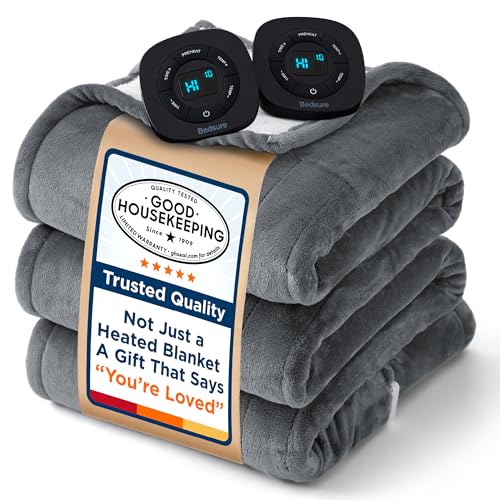
The core challenge of a heated king size blanket isn’t engineering heat; it’s engineering personalized comfort within a shared space. The traditional model one blanket, one control, one temperature is a recipe for compromise, and not the good kind. It leaves one person sweating while the other shivers. The solution isn’t just a better heating element; it’s a smarter control system. A dual-zone approach, which you’ll find in products like the Bedsure model, directly attacks this problem by decoupling the thermal experiences. It treats the king size bed as two separate comfort zones. This isn’t a luxury feature; it’s conflict resolution for your bedroom.
Here’s what I mean: the technology shifts from “How do we heat this large area?” to “How do we provide two independent, precise climates?” This requires separate heating circuits, individual controllers with clear interfaces, and reliable safety protocols for each zone. The result? You’re not just buying a warm blanket. You’re buying a truce.
The Unseen Problems Most Buyers Ignore
Everyone wants warmth. But seasoned users, and anyone who’s had a cheap blanket fail, know the devil is in the details. Let’s investigate the common pain points:
- The Thermostat Tug-of-War: The classic “too hot for me, not enough for you” argument at 2 AM. A single-control blanket turns bedtime into a power struggle.
- Safety Anxiety: That low-grade worry about leaving it on. Is it safe with pets? What if it malfunctions? This mental load destroys the relaxation the blanket is supposed to provide.
- The Sahara Effect: Some blankets pump out dry, oppressive heat that dehydrates you by morning. It’s warmth at the cost of comfort.
- Wash-Day Dread: A bulky, poorly constructed electric blanket that can’t survive the washing machine becomes a hygiene nightmare. You’re stuck spot-cleaning a device you sleep with every night.
- Energy Guilt: Cranking a space heater to warm the room for two is wildly inefficient. A blanket should be a targeted solution, not a whole-house project.
I had a client, a retired couple, who were ready to buy a second bed because of temperature disputes. They’d tried a basic heated mattress pad, but it only made the problem worse one control, two frustrated people. We switched them to a dual-zone blanket system. The wife jokes they saved their marriage and the cost of a bedroom suite. The real victory was uninterrupted sleep.
Deconstructing a Smart Solution: More Than Just Heat
When you evaluate a solution, you must look past the marketing fluff about “cozy warmth.” A sophisticated heated blanket is a climate control system for your body. Think of it not as a blanket, but as a personal thermal microgrid. This analogy frames its components correctly: power input (wall outlet), generation (heating wires), distribution (circuit layout), user interface (controller), and grid safety (auto-shutoff, certifications).
Let’s break down how a well-designed system, exemplified by the features in the Bedsure blanket, tackles those core problems:
| User Problem | Solution Mechanism | Practical Outcome |
|---|---|---|
| Conflicting temperature needs | Dual Control Zones with 10+ Heat Settings | Each sleeper sets their precise “Goldilocks zone” without negotiation. |
| Worry about overnight use | Programmable Timer & Auto Shut-off (e.g., 8-hour default) | Peace of mind. It manages itself, so you can actually sleep. |
| Dry, uncomfortable heat | Preheat Function & Even Heat Distribution Technology | Warms the bed before you get in, then maintains background warmth without roasting you. |
| Durability and care | Reinforced Seams, Machine-Washable Construction, Fade-Resistant Fabric | It’s a household textile that endures use and washing, not a fragile gadget. |
| High energy costs | Low-Wattage Design (e.g., 110W per zone) | Targeted body heating uses a fraction of the energy of heating a room. |
And yes, I learned this the hard way: a blanket with poor stitching will fail at the seams within a season. The heating wires are only as good as the textile housing them. Neat, strong stitching isn’t an aesthetic bonus; it’s critical infrastructure.
The Myth-Busting Point: Bigger Heat isn’t Better Heat
Here’s a contrarian take: The highest heat setting is often useless. In fact, relying on it is a sign of a poor-quality blanket. If you need to crank it to “10” to feel anything, the heat distribution is probably uneven, or the blanket is poorly insulated. Effective warmth comes from consistent, even heat at moderate temperatures (levels 3-7 are typically the sweet spot) paired with a good insulating fabric like flannel or sherpa that traps the warmth your body and the wires generate. A good blanket is a collaborator, not a dictator.
Actionable Framework for Choosing Your Solution
Don’t just buy a heated blanket. Solve your thermal discomfort. Use this framework to assess any option:
- Identify the Zone(s): Is this for one person or two? If two, dual controls are non-negotiable. It’s the single most important feature for a king size.
- Audit for Safety Credentials: Look for legitimate certifications (ETL, UL) and a clear auto-shutoff. This isn’t an area for bargain hunting.
- Evaluate the Fabric System: It must be soft, durable, and washable. Feel it if you can. The fabric is what you actually touch all night.
- Understand the Control Logic: How many timer settings? Can you preheat? The interface should make it easy to program and forget.
- Calculate the Real Cost: Factor in energy use (low wattage) and longevity (construction quality). A cheap blanket replaced twice is more expensive than a good one that lasts.
The result of applying this framework? You move from looking for a “heated blanket” to sourcing a “personalized sleep climate system.” Your nights get warmer, your sleep improves, and the only thing you’ll be fighting over is who gets the dog on their side.
Your Next Steps
Start with your own pain point. Is it arguments? Focus on dual-zone control. Is it fear of fire? Prioritize lab-tested safety features and robust certifications. Is it rough fabric? Make material the top filter. A product like the Bedsure electric blanket king size works as a potential solution because it addresses this matrix of problems zonal control, verified safety, soft/washable fabric, and smart features like a preheat timer rather than just selling you on “warmth.”
Finally, remember this: The best heated blanket is the one you don’t have to think about. It quietly does its job, keeps the peace, and lets you sleep. that’s the real warmth you’re looking for.
⚡ Grab This Deal While It Lasts
👉 Check the Latest Price on Amazon 👈
⭐️ Trusted by 1,000+ Customers Worldwide