
What sets successful heated blanket rechargeable portable solutions apart is their focus on solving a very specific human problem: the need for personal, on-demand warmth that isn’t tethered to a wall. It’s not about the blanket. It’s about freeing you from the chill. Let’s talk about how that actually works.
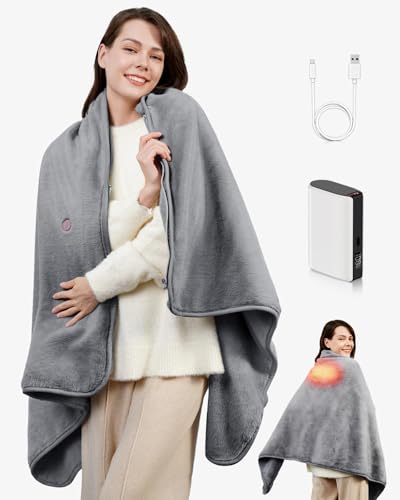
Technical Advantages for heated blanket rechargeate portable
The core challenge is converting stored battery energy into safe, consistent warmth you can move with. The technical path you choose dictates everything about the experience.
The Heart of the Matter: Heat Generation
You have two main camps: traditional wire elements and modern film systems. Wires are the old guard. They work, but they’re thicker, less flexible, and can create noticeable hot spots. The newer approach uses carbon nanotube or similar conductive films. This is a game-changer for portability. The film is whisper-thin, distributes heat more evenly, and is far less prone to damage from folding or packing. it’s the difference between a rigid map and a flexible smartphone screen.
I packed a wired portable blanket for a camping trip once. By day two, a fold had created a pressure point that led to a cold strip right down the middle. Never again.
Here’s a quick comparison of the underlying tech:
| Technology | Pros | Cons | Best For |
|---|---|---|---|
| Traditional Wire Elements | Lower cost, proven durability | Heavier, less flexible, potential for hot spots | Static, at-home supplemental use |
| Carbon Nanotube / Far-Infrared Film | Even heat, ultra-thin, lightweight, more durable for travel | Often higher initial cost | Active use, travel, packing into bags |
The Power Problem: Batteries and Runtime
This is where most portable blankets face their toughest test. Battery capacity is the non-negotiable currency. But here’s the myth-busting point: bigger battery doesn’t always mean better blanket. A massive, heavy battery pack might give you 8 hours of heat, but it turns your “portable” throw into a weighted anchor. The real engineering feat is balancing battery size with efficient heat technology to maximize useful runtime.
Consider a product like the RayoLife blanket as an example of this balance. Its pack aims for a minimum 2-hour continuous heat. that’s a strategic target. It covers a long movie, a work session at a chilly cafe, or settling in at a campsite. It forces efficiency in the heating system itself. (And yes, I learned this the hard way with an early model that died in 45 minutes.)
The Real-World Use Cases You Actually Face
Let’s move past specs. Why do you really want one of these?
- The Home Thermostat War: Your partner likes it at 67 F. You’re a human icicle. A portable heated blanket is your personal ceasefire agreement.
- The Drafty Workspace: Whether it’s a home office by a leaky window or a corporate building with aggressive AC, a cordless blanket means reclaiming your focus.
- Travel & Transit: Planes, trains, long car rides. You’re at the mercy of their climate control. A battery-powered throw is your climate bubble.
- Outdoor Enthusiasts: Tailgating, camping, watching night games. It extends your season and comfort.
The Unexpected Analogy: Your Smartphone
Think of a high-quality portable heated blanket like your smartphone. It’s a personal device you charge daily (or after use). You manage its battery life based on your needs (low power mode = lower heat setting). Its value isn’t in its components, but in the freedom and function it enables. You wouldn’t carry a desktop computer to a park. Don’t choose a blanket with the portability of a desktop computer.
A Practical Framework for Choosing
Forget features. Ask these questions:
- What’s my primary mobility scenario? (Couch-to-bed, car travel, backpacking?)
- What’s my minimum required session length? (A 90-minute movie vs. a 4-hour work marathon?)
- How important is packability? Does it need to stuff into a tote bag or laptop case?
- What’s my wash-cycle reality? If it can’t survive the machine, it won’t survive your life.
A product that nails these questions, like the RayoLife with its machine-washable, film-based heat and dedicated battery pack, is solving the right problems. The plush faux fur? that’s solving the comfort problem. Both are critical.
Actionable Recommendations for Solving Your Warmth Problem
Here’s what to do next.
- Prioritize Heat System Over Seek out “carbon fiber heating” or “far-infrared film” in descriptions. This indicates modern, even warmth.
- Decode the Battery Claims: “Up to” runtime is a fantasy. Look for “minimum” or “continuous” heat times. Assume you’ll get 20% less than the best-case scenario.
- Feel the Weight: If possible, assess the total weight blanket plus battery. Over 5-6 pounds starts to feel less portable.
- Check the Safety Net: Overheat protection and automatic shut-off aren’t luxury features. They’re mandatory for any device that creates heat and runs on batteries.
The result? You move from being sold a product to selecting a solution. You stop looking for a “heated blanket” and start looking for a “personal warmth platform.” That shift in perspective changes everything. Choose the tool that disappears into your life, leaving only the warmth behind.
🏆 Unlock Today’s Offer →
👉 Check the Latest Price on Amazon 👈
⭐️ Trusted by 1,000+ Customers Worldwide