Keeping your pool warm and clean can be challenging, especially when trying to avoid high energy bills. Solar pool covers provide an eco-friendly solution, using the sun’s energy to maintain water temperature while reducing evaporation.
In this roundup, we evaluate the top solar pool covers available, focusing on their performance, durability, and suitability for various pool types.
Comparison of Top Solar Pool Covers
| Product | Best for | Size | Mil Thickness | Heat Retention | Best Use Case | Price |
|---|---|---|---|---|---|---|
| VEVOR Solar Pool Cover 32 x 16 ft 16 Mil | Best Overall | 32 x 16 ft | 16 | Dual air layer heat retention | Most pool owners, inground & above ground | Check price |
| Sun2Solar Blue 24 ft Round Pool Solar Cover 12 Mil | Best for Round Pools | 24 ft round | 12 | Raises water temp up to 15°F | Round pools needing heat & debris prevention | Check price |
| In The Swim 16′ x 32′ Premium Blue Rectangle Solar Cover 12 Mil | Heavy-Duty Choice | 16 x 32 ft | 12 | Thick, tear-resistant, heat retention | Heavy-duty rectangular cover for durability | Check price |
| In The Swim 21′ Standard Blue Round Solar Cover 8 Mil | Best Budget | 21 ft round | 8 | Solar warming, lighter handling | Budget option for easy daily use | Check price |
| VINGLI 18FT Pool Cover Reel for Inground Pools | Best Cover Reel | Fits 14 to 18 ft wide | — | — | Cover reel for easy rolling and storage | Check price |


Top Solar Pool Covers for Effective Heating
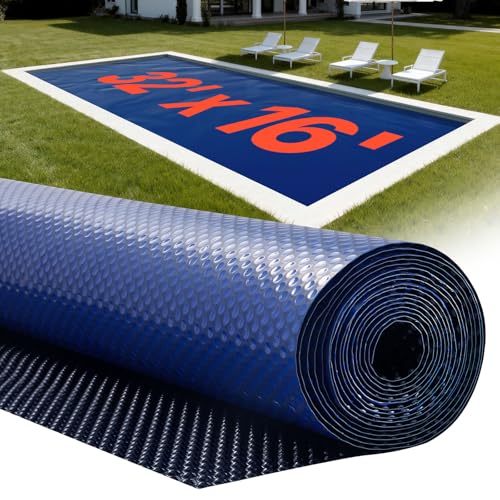
VEVOR Solar Pool Cover 32 x 16 ft 16 Mil
- Size32 x 16 ft
- Mil Thickness16
- MaterialPE
- Water Evaporation ReductionUp to 95%
- Pool TypeInground & Above Ground
- Strong heat retention with dual air layer
- Durable PE material resists cracking and tearing
- Fits inground and above ground pools
- Reduces water evaporation up to 95%
- Not recommended for hot tub use
Sun2Solar Blue 24 ft Round Pool Solar Cover 12 Mil
- Size24 ft round
- Mil Thickness12
- Heat RetentionUp to 15°F increase
- Water Evaporation ReductionUp to 95%
- Pool TypeInground & Above Ground
- Raises water temperature up to 15°F
- Retains heat overnight
- Reduces evaporation by 95%
- Prevents debris entry
- Only available in round shape
In The Swim 16′ x 32′ Premium Blue Rectangle Solar Cover 12 Mil
- Size16 x 32 ft
- Mil Thickness12
- MaterialPolyethylene
- Water Evaporation ReductionMinimizes evaporation
- Pool Type—
- Thick 12 mil material with wide seams
- Cut-to-fit for custom shapes
- Reduces evaporation and chemical use
- Extends swimming season
- Heavier and less flexible than thinner covers
In The Swim 21′ Standard Blue Round Solar Cover 8 Mil
- Size21 ft round
- Mil Thickness8
- MaterialPolyethylene
- Water Evaporation ReductionMinimizes evaporation
- Pool Type—
- Lightweight and easy to handle
- Solar warming and heat retention
- Custom cut-to-fit design
- Reduces water evaporation
- Thinner material less durable for long-term use
VINGLI 18FT Pool Cover Reel for Inground Pools
- Fits Pool Width14 to 18 ft
- MaterialAluminum
- Design3-section pipe, grooved reel tube
- PortabilityTwo wheels, mechanical lock
- Pool ShapeAll shapes
- Lockable telescopic tube for stability
- Durable aluminum, rust-resistant
- Wheelbarrow design for easy transport
- Fits pools up to 18 ft wide
- Not a pool cover, but an accessory
- Width limited to 18 ft
How to Choose the Right Solar Pool Cover
Start by matching the solar pool cover’s size and shape to your pool. A cover that fits well traps heat and reduces evaporation effectively.
Material thickness, measured in mil, affects durability and heat retention. Thicker covers, like 12 to 16 mil, last longer and retain more heat than thinner ones around 8 mil. Choose thicker if you want to extend your swimming season and reduce replacements.
Solar covers float on the water surface, absorbing and transferring heat. This makes floating solar heaters ideal for inground pools, as they conform to the pool shape and prevent heat loss.
For inflatable pools, pick a lightweight cover that fits snugly but is easy to remove. Thinner covers work well here because inflatable pools usually need less heat retention and the cover must not damage the pool material.
Look for covers that reduce water evaporation. This saves water and cuts down on pool chemical loss. Bubble designs with sealed air pockets are the most common and effective at this.
Ease of installation and maintenance matters. Covers should be simple to spread and remove. Some models come with reels or handles to make handling easier, especially for larger pools.
Sizing and Heat Output Considerations
- Measure Pool DimensionsUse a tape measure to get your pool’s length and width for rectangular pools, or diameter for round pools. Measure at the waterline for the best fit.
- Account for Pool ShapeRound covers fit round pools best. Rectangular covers suit rectangular pools. Using the wrong shape reduces coverage and heat retention.
- Consider Cover ThicknessThicker covers (12 to 16 mil) hold heat better but can be heavier and harder to handle. Thinner covers (8 mil) are lighter but lose heat faster.
Running Costs and Energy Savings
A solar pool cover costs nothing to run once installed. It uses the sun’s energy to warm your pool and reduce heat loss. This makes it far cheaper than electric pool heaters, which draw power continuously.
Solar covers cut water evaporation by up to 95%. This means you spend less on refilling your pool and on chemicals lost to evaporation. One inch of water evaporated from a 20-by-40-foot pool equals about 5,000 gallons lost.
Electric heaters typically consume 5,000 to 15,000 watts when running. Using a solar cover can reduce heater runtime or eliminate it altogether, saving hundreds of dollars a month on electricity. For comparison, a 1,500-watt electric heater running 8 hours daily at $0.17 per kWh costs about $20.40 monthly.
| Energy Source | Watts | Hours per Day | Cost per kWh | Monthly Cost |
|---|---|---|---|---|
| Electric Heater | 1500 | 8 | 0.17 | 20.40 |
| Solar Pool Cover | 0 | 8 | 0.17 | 0.00 |
Solar pool covers typically last 3 to 7 years depending on material thickness and UV resistance. Thicker covers like the 16-mil VEVOR model last longer and resist tearing better. Their long lifespan spreads out the initial cost, making them a solid investment.
Use a solar cover whenever the pool is not in use to maximize savings. Removing it during storms and storing it correctly extends its life. The energy and water savings combined can cover the cover’s cost in a single season.
Safety and Certification Considerations
Solar pool covers are safe when made from UV-resistant materials that withstand sun exposure without degrading. Look for covers made from polyethylene or similar plastics rated for UV protection to avoid brittleness and breakage.
Safety certifications can indicate quality. Look for products certified by recognized bodies such as UL or ETL for durability and material safety. These certifications ensure the cover meets industry standards for performance and user safety.
Handle solar covers carefully to avoid tears and punctures. Remove debris before rolling or folding the cover to prevent damage. Store covers in a shaded, dry place when not in use to prolong lifespan and reduce fire risk.
- Inspect RegularlyCheck the cover for cracks or thinning spots that weaken its protective ability.
- Clean GentlyUse mild soap and water to clean the cover; avoid harsh chemicals that degrade the material.
- Store ProperlyRoll or fold the cover loosely and keep it in a cool, shaded area away from sharp objects.
Are solar pool covers safe? Yes, when you choose UV-resistant materials and follow safe handling practices. Proper maintenance and storage prevent damage and reduce risks.
Certifications for solar pool covers are not mandatory but provide extra assurance. They confirm the cover’s compliance with safety and durability standards, helping you pick a reliable product.
Follow manufacturer instructions for use and storage. Avoid dragging the cover over rough surfaces to prevent rips. Keep children and pets off the cover to prevent accidents or damage.
For more on heating your pool efficiently, see our guide to the best solar pool heater.
Unique Features of Solar Pool Covers Often Overlooked
Solar pool covers offer more than just heat retention. They reduce chemical use by limiting evaporation, which slows the loss of chlorine and other pool chemicals. This means you add chemicals less often, saving money and reducing chemical exposure.
By cutting evaporation, solar covers also help conserve water. Pools lose thousands of gallons yearly to evaporation, especially in hot, dry climates. Covering the pool reduces this loss significantly, which benefits the environment and lowers your water bills.
Maintenance is straightforward with solar covers. They resist algae growth because sunlight penetration is reduced. Cleaning involves simply rinsing the cover with a hose and occasionally scrubbing with mild soap. This ease of care encourages regular use, which maximizes the cover’s benefits.
- Reducing pool chemical consumption
- Conserving water by minimizing evaporation
- Low-maintenance cleaning and care
- Covers can degrade if left on year-round without occasional removal
- May require a reel or handling system for large pools
Frequently Asked Questions
What is the best solar pool cover for inflatable pools?
How much heat can a solar pool cover retain?
Can solar pool covers be used for any pool type?
What thickness of solar pool cover is best?
How do I install a solar pool cover?
What are the maintenance requirements for solar pool covers?
There is more on how to winterize a birdbath in a guide of its own.
If that sounds like your room, read up on efficient pool heating options next.