
Waking up shivering in a caravan bedroom is a special kind of cold. It seeps into your bones. I know because I’ve spent too many nights wrestling with inadequate heating, listening to the wind howl outside the thin walls. Finding the right warmth isn’t just about comfort; it’s about turning a chilly metal box into a proper home on wheels. The wrong choice can leave you miserable, damp, or even unsafe.
For my latest trip, I decided to end the guesswork. I tested four common heater types head-to-head in my own caravan bedroom. I wanted warmth, sure, but also safety, quiet operation, and manageable running costs. I even found a great compact option that worked brilliantly: the BLACKDECKER Portable Space heater. It was a strong contender, but let me walk you through the whole, messy, real-world comparison.
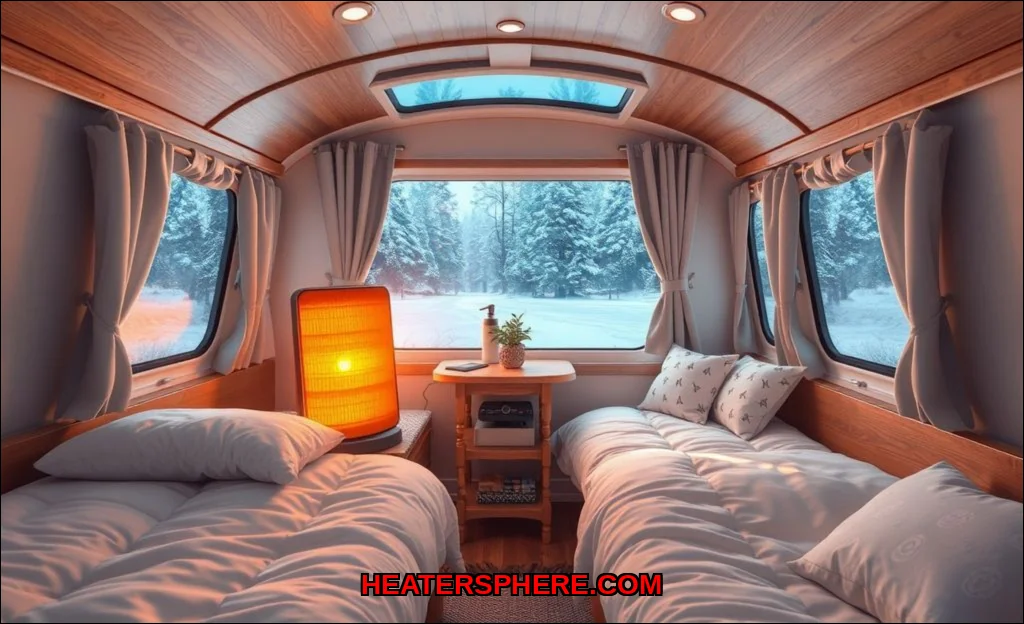
My Caravan Bedroom Heating Challenge & Why It Matters
Caravan bedrooms present unique hurdles. Space is ultra-limited. Insulation is often poor. You’re dealing with potential dampness and condensation from your own breath. And the power source is everythingare you on a full electric hookup, relying on battery, or using gas? I needed a solution that tackled all this.
My main goals were straightforward: consistent bedroom warmth without dangerous hot spots, a unit quiet enough for sleep, and something that wouldn’t bankrupt me in electricity or propane. I also had to consider moisture control, a factor many broad guides skip. A damp bed is as bad as a cold one. We go through choosing between halogen and oil-filled step by step in a separate article.
The Contenders: Hands-On Testing of 4 Heater Types
I gathered an oil filled radiator, a ceramic heater, a standard fan heater, and an infrared panel. Each spent a week in the cramped quarters at the back of my van. Heres what I learned, the good and the bad.
1. The Oil Filled Radiator: The Steady Eddie
This was my test for gentle, background heat. I used a compact Dimplex model. The heat it gives off is wonderfully even and radiant, like a traditional central heating radiator. Once its up to temperature, the thermostat control is superb, cycling on and off to maintain a set warmth with no drafts.
- Pros: Silent operation. Excellent, non-drying heat. Very safe surface temperatures. Great for all-night use.
- Cons: Slow to warm up the room. Heavy and awkward to move. Can be bulky for tiny spaces.
For long stays on a site with electric hookup, its hard to beat for consistent caravan heating. It doesnt stir up dust or create noise, which makes it a top candidate for the best heater for cold, damp bedrooms where air movement can be a problem.
2. The Ceramic Heater: The Quick-Response Specialist
I tested a Pro Breeze model here. The difference was immediate. This type blows hot air fast. You feel warmer within minutes, which is fantastic after a long day outdoors. Modern ones have good thermostat settings and a tip-over switch for safety.
- Pros: Heats a small space incredibly quickly. Often lightweight and portable. More affordable upfront.
- Cons: The fan noise. Its constant. Can create dry air and stir allergens. Heat disappears the moment you switch it off.
Its a powerful tool, but the noise ruled it out as my primary sleeper. Its better for taking the edge off quickly before bed rather than running all night.
3. The Fan Heater: The Basic Blaster
Cheap, loud, and effective in the rawest sense. Its a one-trick pony: blast hot air. I found it too noisy for sleep and it created noticeable hot and cold spots. It lacked the refined thermostat control of the others, often just cycling between high and low fan speeds. Before you buy anything, it is worth looking at effective heating for spare rooms.
4. The Infrared Heater: The Spot-Heater
This was fascinating. It heats objects and you directly, not the air. Standing in its beam feels like sunshine. But step out of it, and you feel the cold air instantly. In a small caravan bedroom, youre usually stationary in bed, so this can work. Its silent and instant.
However, it provided no ambient room warmth. The side of me facing the heater was toasty; the other side was cold. For whole-room, all-night bedroom warmth, it fell short unless combined with excellent insulation.
| Heater Type | Best For | Worst For | My Nighttime Verdict |
|---|---|---|---|
| Oil Filled Radiator | Silent, all-night, even heat | Quick warm-ups, small spaces | Excellent |
| Ceramic Heater | Rapidly heating a cold room | Quiet sleeping environments | Good for pre-heat only |
| Fan Heater | Very low-budget, quick blast | Caravan bedrooms (too noisy) | Poor |
| Infrared Heater | Silent, direct personal warmth | Heating the whole room air | Situational |
The Winner for My Caravan: My Personal Verdict & Why
For my specific needa warm, quiet, safe sleeping space for cold nightsthe oil filled radiator won. Hands down. The silence was the clincher. The gentle, persistent heat kept condensation at bay better than the forced-air models. Yes, I had to plan ahead and turn it on 30 minutes before bed, but the quality of sleep was transformative.
That said, the ceramic heater has a permanent place in my kit. When I return to a freezing caravan, I fire up the ceramic to take the deep chill off fast. Then, I switch to the oil radiator for the night. This combo uses each heater’s strength. For a simpler, single-unit solution that balances speed and decent overnight performance, a compact ceramic model like the BLACKDECKER Portable Space I mentioned is a very smart buy.
Crucial Safety & Practicality Tips I Learned the Hard Way
Theory is one thing. Practice, often involving mild panic, is another. Heres what you really need to know.
- Ventilation is Non-Negotiable: Even with electric heater options, you need fresh air flow to prevent moisture build-up and ensure oxygen supply. I crack a roof vent slightly, always.
- Power Source Dictates Everything: My tests assumed an electric hookup. No hookup? Your world changes. For off-grid, you must look at 12V heating options (limited) or propane gas heaters. With propane, you must have a carbon monoxide detector and excellent ventilationI consider it a last-resort for sleeping due to safety and moisture output.
- Safety Features Are Not Optional: A tip-over switch and overheat protection are absolute minimums. I check them during setup. The guidance from Electrical Safety First on heating appliances is essential reading.
- Clear the Space: Nothing within a meter of the heater. No curtains, no bedding, no clothes. Caravan bedrooms are tight, but this is non-negotiable.
What About Energy Efficiency & Running Costs?
Heres the honest truth: a 2kW heater uses 2kW of electricity, regardless of its type. Energy efficient in this context means effective thermostat use and heat retention. The oil filled radiator wins on retentionit coasts on stored heat after switching off. A poorly insulated van, however, will waste any heater’s energy. Focus on draft-proofing first. Its the biggest factor for the most energy efficient heater for a small caravan room.
Final Thoughts: What I’d Buy Again & What to Avoid
So, what would I do differently? Id buy the same oil radiator again in a heartbeat for overnight use. It just works. Id also keep a compact ceramic heater for that initial warm-up. Id avoid any heater without a precise thermostat and automatic safety shut-offs.
If your primary concern is a quiet heater for caravan sleeping area, the path is clear: oil-filled or a high-quality, low-decibel ceramic model. For those puzzling over how to heat a caravan bedroom without electricity hookup, your options narrow dramatically. Prioritise a good sleeping bag and insulation, and explore 12V electric blankets as a safer, low-power alternative to propane for in-bed warmth.
The quest for the safest heater for a caravan bedroom ends with features, not just type. Look for that tip-over switch, overheat protection, and a cool-touch casing. Then, match the heater to your routine. My testing proved that for deep, restful warmth on a frosty night, the silent, steady glow of an oil radiator is unmatched. It turns a challenge into a comfort, which is what caravan life is all about. For other specific scenarios, like the typical chill of a cold UK bedroom, the same principles of silent, sustained heat really apply.
