


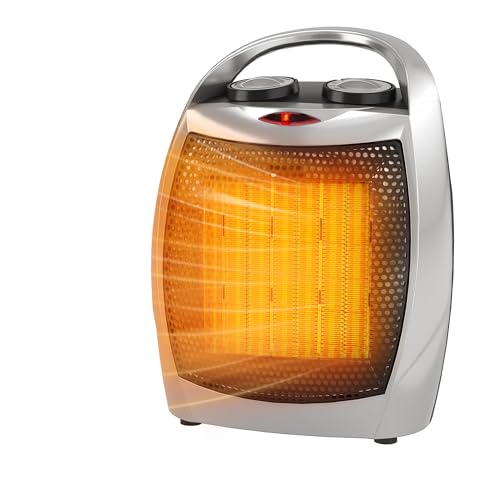


Finding the right heater for a student room or small apartment can be challenging. You need something that heats quickly, operates quietly, and stays safe in a compact space.
With so many options available, it’s crucial to choose a heater that meets your specific needs without breaking the bank. This guide will help you find the perfect fit.
Heater Feature Comparison
| Product | Best for | Heat Settings | Auto Shut-off | Size | Price |
|---|---|---|---|---|---|
| DREO 1500W Ceramic Space Heater | Best Overall | 1000W-1500W | 12-hour timer, 24-hour auto off | — | Check price |
| WINHL Portable Electric Space Heater with Remote | Best Remote Control | — | Timer via remote | — | Check price |
| Takywep 1500W/750W Small Space Heater | Best Compact Size | 750W, 1500W | Overheat and tip-over protection | 7.08″L x 5.16″W x 10.71″H | Check price |
| Amazon Basics 1500W Ceramic Space Heater | Best Budget Choice | Fan, 900W, 1500W | Tip-over and overheat protection | 7.52″D x 6.34″W x 9.45″H | Check price |
| BLACK+DECKER BHDC201 Personal Ceramic Heater | Best Portable | Fan, 750W, 1500W | Tip-over and overheat protection | — | Check price |
Top Heaters for Student Rooms and Small Apartments
DREO 1500W Ceramic Space Heater
- Heat Settings1000W-1500W
- Auto Shut-off12-hour timer, 24-hour automatic power off
- Size—
- Fast heat-up with 1500W ceramic element
- Quiet operation at library noise level (34dB)
- Multiple safety features including tip-over and overheat protection
- Wide 70° oscillation for even heat distribution
- Oscillation may be unnecessary for very small rooms
WINHL Portable Electric Space Heater with Remote
- Heat Settings—
- Auto Shut-offTimer settings via remote
- Size—
- Remote control for convenient adjustments
- Fast ceramic heating with wide oscillation
- Built-in overheat and tip-over safety protections
- Remote requires 2 AAA batteries (not included)
- No precise thermostat sensor mentioned
Takywep 1500W/750W Small Space Heater
- Heat Settings750W, 1500W
- Auto Shut-offOverheat and tip-over protection
- Size7.08″L x 5.16″W x 10.71″H
- Very quick heat-up in 2 seconds
- Adjustable thermostat for consistent comfort
- Dual safety protection and fuse protection
- Compact size with long power cord
- Noise level up to 46dB, louder than some competitors
Amazon Basics 1500W Ceramic Space Heater
- Heat SettingsFan, 900W, 1500W
- Auto Shut-offTip-over and overheat protection
- Size7.52″D x 6.34″W x 9.45″H
- Three heat/fan settings including fan-only
- Compact and lightweight for portability
- Safety features include tip-over and overheat protection
- No oscillation for wider heat distribution
- Not recommended for humid environments
BLACK+DECKER BHDC201 Personal Ceramic Heater
- Heat SettingsFan, 750W, 1500W
- Auto Shut-offTip-over and overheat protection
- Size—
- Adjustable thermostat with manual controls
- Automatic tip-over and overheat safety shutoffs
- Lightweight and easy to carry handle
- No oscillation feature
- Manual thermostat may require adjustment
How to Choose Heaters for Student Rooms
Choose a heater based on your room size, safety features, and heat output. For most student rooms and small apartments, a 1,500-watt heater is ideal. It heats spaces up to 270 square feet efficiently without overloading typical electrical circuits.
Safety is non-negotiable. Look for heaters with tip-over and overheat protection. These features automatically shut off the heater if it falls or gets too hot. Prioritize models with ETL certification, which means they meet strict safety standards for indoor use.
Many students wonder if space heaters are safe overnight. Most manufacturers advise against running heaters unattended or while sleeping unless the model specifically states it is designed for that use. Choose a heater with an auto shutoff timer for extra safety and convenience.
| Room Size (sq ft) | Recommended Heater Wattage |
|---|---|
| Up to 150 | 750 to 1,000 W |
| 150 to 270 | 1,500 W |
| Over 270 | Consider multiple heaters or central heating |
- Check Room SizeMeasure your room to estimate the heating power needed. A 1,500 W heater suits rooms up to 270 sq ft.
- Verify Safety FeaturesConfirm the heater has tip-over and overheat protection and an ETL safety certification.
- Consider Auto ShutoffChoose models with timers or auto shutoff to prevent accidents during overnight use.
| Appliance | Watts | Per hour | Per day (8 h) | Per month (30 days) |
|---|---|---|---|---|
| 1,500 W space heater | 1,500 W | 26¢ | $2.04 | $61.20 |
| Heated blanket | 100 W | 1.7¢ | 14¢ | $4.08 |
Understanding Heater Types and Their Efficiency
Ceramic, oil-filled, and fan heaters each suit different needs in small spaces. Ceramic heaters use PTC elements that heat quickly and quietly, often around 34 dB. Oil-filled radiators heat slower but retain warmth longer after switching off.
Fan heaters blow warm air fast, which can heat a room quickly but may be noisier. Efficiency depends on wattage, usually capped at 1,500 W for portable models. Small heaters can heat large rooms effectively if they include oscillation and a thermostat to maintain temperature.
| Heater Type | Heat-up Speed | Noise Level | Best For |
|---|---|---|---|
| Ceramic | Fast | Quiet (around 34 dB) | Bedrooms, study rooms |
| Oil-filled | Slow | Very quiet | Long overnight heating |
| Fan | Very fast | Moderate | Quick heat distribution |
Ceramic heaters with oscillation cover about 70 degrees, spreading heat evenly. Oil-filled models excel at consistent background warmth but consume electricity continuously while on. Fan heaters use energy to power the fan in addition to heating, which can increase consumption slightly.
Choose ceramic heaters for quick, quiet heating in study or sleeping areas. Oil-filled heaters work well if you want steady warmth and can wait for slower heat-up. Fan heaters fit when you need fast heat in a well-ventilated room but can tolerate some noise.
Small heaters generally cannot heat very large rooms alone, but models with oscillation and thermostats can efficiently warm spaces up to 270 square feet. For larger areas, multiple heaters or a central system are better.
Cost of Running a Space Heater
Running a 1,500-watt space heater costs about 17 cents per hour at an electricity rate of 11 cents per kWh, the US average. That adds up to roughly $40 a month if you run it eight hours daily. Calculating cost is simple: watts divided by 1,000, multiplied by hours used, then multiplied by the rate per kilowatt-hour.
Energy efficiency between heater types is close because electric heaters convert nearly all their power to heat. The difference lies in how well the room retains that heat. A ceramic heater with a digital thermostat can adjust output to maintain temperature, saving energy over a model stuck on high.
Room insulation hugely impacts costs. A well-insulated 150-square-foot student room needs less heat to stay warm. Drafts, single-pane windows, or poor door seals increase running time and bills. Sealing gaps and adding curtains reduce heat loss and cut costs.
Older buildings often have weaker wiring or shared circuits that trip breakers when a high-wattage heater runs. Features like adjustable thermostats, ECO modes, and gradual heat-up help prevent sudden power surges. Using a heater with a power draw capped around 1,500 watts avoids overloading typical 15-amp circuits.
| Heater Type | Typical Watts | Monthly Cost @ 8 hrs/day | Notes |
|---|---|---|---|
| Ceramic PTC | 1500 | See the button for current pricing. | Adjustable thermostat saves energy |
| Oil-filled Radiator | 1500 | See the button for current pricing. | Retains heat after turning off |
| Fan Heater | 1500 | See the button for current pricing. | Quick heat, less retention |
Safety Features to Look For
Tip-over and overheat protection are essential safety features in student room heaters. Tip-over switches shut the heater off if it falls, preventing fires. Overheat sensors cut power if internal temperatures get too high, stopping damage and hazards.
Prioritize heaters with ETL or UL certification. These marks confirm the heater meets rigorous safety standards for electrical appliances in the US. Certification ensures the product has been tested for fire risks, electrical faults, and safe operation.
Flame-effect heaters can be safe for apartments if they carry proper safety certifications and have automatic shutoff features. They provide ambient warmth without real flames but often consume more power. Consider your ventilation and room size before choosing one.
Design matters for safe use. Look for heaters with stable bases, cool-touch exteriors, and cords long enough to reach outlets without stretching. Child lock features prevent accidental changes to settings. A timer or auto shutoff adds convenience and safety when you forget to turn off the heater.
- Check for Tip-Over ProtectionMake sure the heater shuts off automatically if it falls over.
- Look for Overheat SensorsThe heater should power down if it gets too hot inside.
- Verify Certification MarksChoose models with ETL or UL certification for proven safety.
- Assess Design SafetyStable base, cool-touch surfaces, and child lock features improve safe operation.
- Avoid Uncertified Flame-Effect ModelsOnly use flame-effect heaters with proper safety approvals and auto shutoff.
Noise Levels and Their Impact on Study Environments
Noise level directly affects how well a heater fits in a bedroom or study. A loud heater can disrupt concentration and sleep, making quiet models essential for student rooms.
Electric heaters with PTC ceramic elements, like the DREO Space Heater, operate around 34 decibels. This is comparable to a quiet library and low enough to avoid distracting most people while studying or sleeping.
Oil-filled radiators are often considered quiet, but some ceramic heaters match or beat their noise levels. Fan heaters tend to be louder due to moving parts, so choose carefully if silence is a priority.
Oscillation helps spread heat evenly, which can reduce the need for higher fan speeds or multiple heaters. Most oscillating heaters cover about 70 degrees, improving warmth distribution without adding much noise. They are usually better than stationary models for comfort and energy efficiency in small rooms.
- Pick a Quiet HeaterLook for models rated near 34 dB or lower. Avoid heaters with noisy fans if you need silence for study or sleep.
- Consider OscillationChoose an oscillating heater to spread heat more evenly. This reduces hot and cold spots and can lower overall noise by avoiding high fan speeds.
- Check Safety FeaturesEnsure your heater has tip-over and overheat protection, especially in small spaces. Quiet operation should not come at the expense of safety.
