
Hard water can wreak havoc on your water heater, leading to corrosion and unpleasant odors. Selecting the right anode rod is crucial for maintaining the efficiency and longevity of your unit.
In this guide, we’ll explore the best anode rods specifically designed to handle hard water conditions, ensuring your water heater remains protected and odor-free.
Comparison of Anode Rods for Hard Water
| Product | Best for | Material | Length | Warranty | Compatibility | Price |
|---|---|---|---|---|---|---|
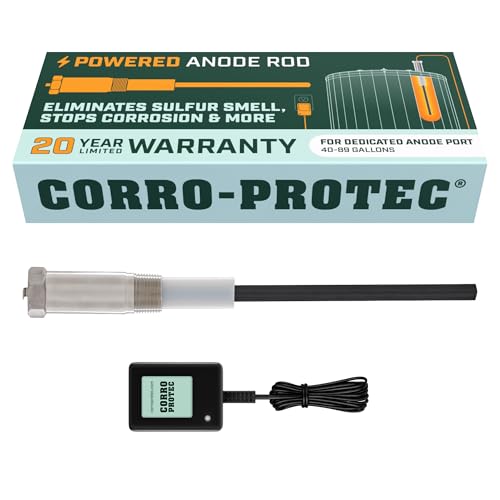
| Corro-Protec Powered Titanium Anode Rod | Best Overall | Titanium | — | 20 years | 40-89 gallon tanks except Bradford White | Check price |
| HertzEagle Powered Titanium Anode Rod | Energy Efficient | Titanium | — | 20 years extended | 40-89 gallon tanks except Bradford White | Check price |
| yrjns 44″ Flexible Magnesium Anode Rod | Best Flexible | Magnesium | 44 inches | — | Most ¾” NPT water heaters | Check price |
| Oneness 369 RV Magnesium Anode Rod 2-Pack | Best for RVs | Magnesium | 9.25 inches | — | Suburban and similar RV water heaters | Check price |
| Oneness 369 RV Magnesium Anode Rod 2-Pack Black Nut | Best for Soft Water | Magnesium | 9.25 inches | — | Suburban and similar RV water heaters | Check price |


Top Anode Rods for Hard Water
Corro-Protec Powered Titanium Anode Rod
- MaterialTitanium
- Compatibility40-89 gallon tanks except Bradford White
- Warranty20 years
- Titanium construction for long life
- Eliminates rotten egg smell fast
- Reduces sediment buildup
- 20-year warranty
- Not compatible with Bradford White tanks
HertzEagle Powered Titanium Anode Rod
- MaterialTitanium
- Compatibility40-89 gallon tanks except Bradford White
- Warranty20 years extended
- Consumes under $3 electricity yearly
- Eliminates sulfur smell quickly
- Protects against all water hardness levels
- 20-year extended warranty
- Limited 5-year base warranty initially
- Not for Bradford White tanks
yrjns 44″ Flexible Magnesium Anode Rod
- MaterialMagnesium
- Length44 inches
- CompatibilityMost ¾” NPT water heaters
- Flexible segmented design
- Fits most standard water heaters
- High durability and reliability
- Magnesium may corrode faster in very hard water
- No odor control
Oneness 369 RV Magnesium Anode Rod 2-Pack
- MaterialMagnesium
- Length9.25 inches
- CompatibilitySuburban and similar RV water heaters
- Pure magnesium for strong protection
- Galvanized nut for harsh water
- Pre-applied Teflon tape for leak-free install
- Includes spare rod
- Short 9.25″ length limits use to RV heaters
- No odor control
Oneness 369 RV Magnesium Anode Rod 2-Pack Black Nut
- MaterialMagnesium
- Length9.25 inches
- CompatibilitySuburban and similar RV water heaters
- Enhanced electrochemical pull for soft water
- Pure magnesium core
- Leak-free installation with Teflon tape
- Includes spare rod
- Short length limits to RV heaters
- No odor control
How to Choose the Right Anode Rod for Hard Water
Anode rods protect your water heater from corrosion by attracting rust to themselves. In hard water areas, replace the anode rod every 2 to 3 years, as mineral buildup accelerates wear.
Material choice matters. Magnesium rods corrode faster in hard water but provide better protection and reduce odors. Aluminum rods last longer in hard water but may not control odors as well. Powered anode rods, made from titanium and connected to a low-voltage power source, last up to 10 years and eliminate sulfate odors effectively.
If you have a water softener, magnesium rods are usually the best choice. Softened water is less corrosive, so magnesium lasts longer and maintains better protection. Aluminum rods are less effective with softened water and may release more aluminum ions.
Check your water heater model for anode rod compatibility. Some models require specific thread sizes or rod lengths. Also, review warranty terms; some manufacturers void warranties if you use a non-approved anode rod.
| Material | Pros | Cons | Typical Lifespan |
|---|---|---|---|
| Magnesium | Better protection and odor control | Shorter life in hard water | 2-3 years |
| Aluminum | Longer life in hard water | Less odor control, possible aluminum exposure | 3-5 years |
| Powered (Titanium) | Longest life, controls odors | Higher upfront cost, requires power source | Up to 10 years |
Sizing and Compatibility for Anode Rods
Choosing the correct size anode rod ensures full protection and easy installation. Measure your water heater’s existing rod length and diameter before buying. Common lengths range from 36 to 54 inches, with 3/4-inch or 1-inch NPT threads.
Flexible anode rods bend to fit water heaters with limited clearance or unusual tank designs. Standard rods are rigid and best for straight, easily accessible tanks. Flexible rods typically cost more but simplify installation in tight spaces.
Water source affects material choice. For well water, aluminum rods resist mineral deposits better but may leach aluminum. Magnesium rods offer better corrosion protection but corrode faster in well water conditions. Powered rods suit all sources and reduce odors from sulfates common in well water.
The best anode rod for a water heater depends on your water conditions and heater model. Powered rods like the Corro-Protec Powered Anode Rod offer long life and odor control, ideal for hard or well water. For basic protection, magnesium rods fit most heaters and water types.
| Type | Best for | Installation Notes |
|---|---|---|
| Standard Magnesium | Most water heaters, softened water | Rigid, standard fittings |
| Standard Aluminum | Hard water, well water | Rigid, may require specific fittings |
| Flexible Magnesium | Tight spaces, hard-to-reach tanks | Bends for installation, same protection |
| Powered Titanium | Hard water, odor issues, well water | Requires power connection, longest life |
Understanding Running Costs and Efficiency
Anode rods in hard water conditions typically need replacement every 1 to 3 years. For domestic hot water tanks, replacing the anode rod every 3 to 5 years is common, but hard water shortens this cycle.
Traditional magnesium or aluminum anode rods have no direct running costs since they work passively by corroding instead of the tank. Their cost is mainly replacement and labor every few years, depending on water conditions.
Powered anode rods, like the Corro-Protec, use electricity to produce a protective current that reduces corrosion. They consume around 1.5 to 2 watts continuously. At a typical electricity rate of 17 cents per kWh, this adds about $2.20 to $3.00 per year to your electric bill.
| Appliance | Watts | Per hour | Per day (24 h) | Per month (31 days) |
|---|---|---|---|---|
| Powered anode rod (2 W) | 2 W | 0.0¢ | 0.8¢ | 25¢ |
The energy used by powered rods is minimal compared to the cost of replacing traditional rods more frequently in hard water. They also reduce sediment buildup, which can improve water heater efficiency and lower heating costs over time.
Maintenance frequency varies: traditional rods need checking and replacement every 1 to 3 years in hard water. Powered rods require less frequent replacement, often every 6 to 10 years, because they degrade slower.
Safety and Certification for Anode Rods
Anode rods protect your water heater by attracting corrosive elements, preventing rust inside the tank. This process helps maintain water quality by reducing metallic taste and discoloration.
Switching from an aluminum to a magnesium anode rod can reduce the foul odor sometimes caused by aluminum reacting with sulfur bacteria in water. Magnesium rods are generally preferred for better odor control and corrosion protection.
Certified anode rods meet safety and material standards that ensure they perform as expected without introducing contaminants. Look for UL, NSF, or ANSI certifications when buying an anode rod.
Safety features include corrosion resistance to avoid premature failure and non-toxic materials that do not leach harmful substances into your water supply.
| Certification | What It Means |
|---|---|
| UL (Underwriters Laboratories) | Ensures electrical and material safety for powered rods. |
| NSF (National Sanitation Foundation) | Certifies materials safe for contact with drinking water. |
| ANSI (American National Standards Institute) | Confirms compliance with industry standards for performance and safety. |
Choosing a certified anode rod helps maintain your water heater’s lifespan and water quality. Non-certified rods might corrode unevenly or release unwanted elements, affecting safety and taste.
Choosing the Best Anode Rod for Unique Conditions
Aluminum anode rods in hard water usually last about 1 to 2 years before they need replacing. Hard water accelerates corrosion, wearing the rod faster than in softer water.
Magnesium rods corrode faster in hard water, which means they sacrifice themselves more quickly to protect the tank. Aluminum rods resist corrosion better in these conditions but provide slightly less protection. For hard water, aluminum rods often offer a better balance of longevity and protection.
If your water has very high hardness or mineral content, consider a powered anode rod. These use an electric current to prevent corrosion without dissolving the rod material. They last much longer and handle tough water conditions well.
| Condition | Recommended Anode Rod | Reason |
|---|---|---|
| Moderate Hard Water | Aluminum Anode Rod | Better corrosion resistance than magnesium, lasts 1-2 years |
| Very Hard Water or High Mineral Content | Powered Anode Rod | Electric protection extends rod life and tank protection |
| Soft Water | Magnesium Anode Rod | More reactive, provides better protection, lasts longer |
For unique water conditions like acidic water or well water with sulfur, a zinc or powered anode rod may be necessary. Zinc helps reduce odors caused by sulfur bacteria, while powered rods avoid metal depletion altogether. Check your water quality before choosing.
Regular inspection every year or two is critical. Hard water that deposits minerals can coat the rod and reduce its effectiveness. Flushing the water heater tank annually helps remove buildup and prolongs the anode rod’s life.
Choosing the right rod depends on your water’s hardness and chemistry. Aluminum rods suit most hard water cases. Powered rods are the best option for very hard or problematic water, though they cost more upfront.
For more about powered rods and their benefits, see our detailed guide on the best powered anode rod.
Frequently Asked Questions
How often should the anode rod be replaced in hard water areas?
What is the best anode rod for a water heater?
Do magnesium anode rods last longer in hard vs. soft water?
Should I use a magnesium or aluminum anode rod if I have a water softener?
How long should an aluminum anode rod last in hard water?
What does the anode rod do in a water heater?
There is more on how to replace an anode rod in a water heater in a guide of its own.
We cover anode rods for water heaters in its own guide.