
Your kitchen is freezing. You need a solution now. You’re not looking for a gentle warmth that arrives in an hour. You need a heater that delivers fast, efficient heat to a space filled with unique challenges. Grease, steam, water, and high traffic make kitchen heating a special problem.
For a targeted, powerful blast of heat that gets to work immediately, many turn to a portable ceramic heater. These units excel at focused heat. A model like the DREO Space Heater is a prime example, offering rapid quick warm up with a fan-forced ceramic element. It’s a strong contender when you’re figuring out what type of heater is best for a cold kitchen.
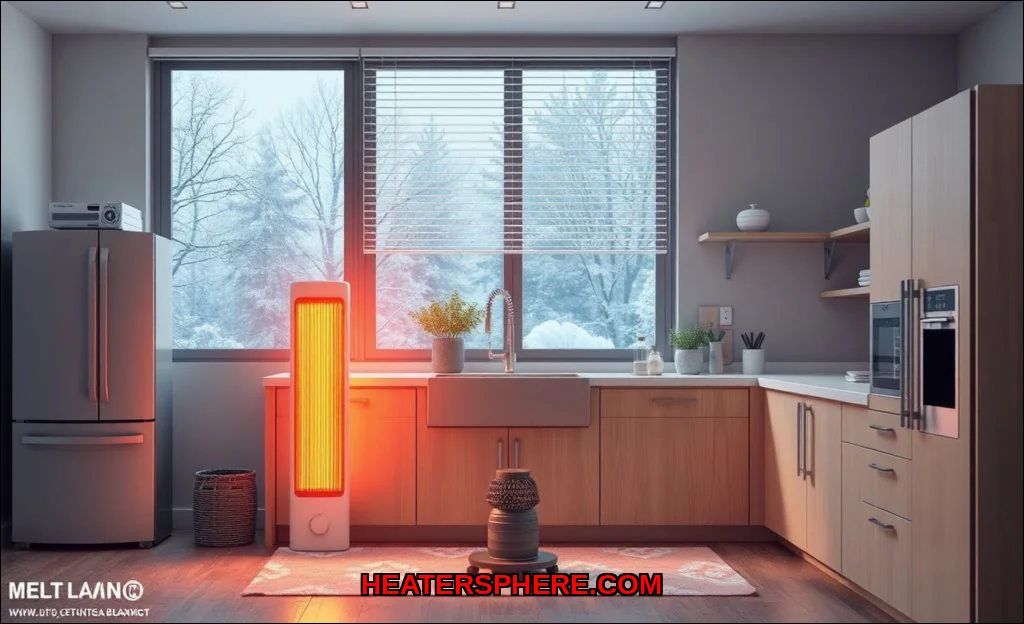
Identify Your Kitchen’s Heating Challenge
First, diagnose the cold. Is it a morning chill or a constant draft? Kitchens often lack the thermal mass of other rooms. Tiled floors and countertops stay cold, sucking warmth from the air. You’re likely dealing with short, intense heating needswarming up for breakfast, taking the edge off while cooking dinner.
You must also confront kitchen-specific hazards. A heater near a sink or stove faces splashes and grease. A unit placed in a walkway risks being knocked over. Standard safety features aren’t enough; you need features built for this environment. This changes everything when you search for the best heater for kitchen use.
What Makes a Kitchen Different?
- Moisture & Grease: Steam from boiling pots and airborne cooking oil can damage internal components or create fire risks.
- High Traffic: People are constantly moving, requiring a stable, low-profile unit or a wall-mounted option.
- Short Burst Needs: You often need heat for 30-60 minutes, not all day. Fast heating is non-negotiable.
- Focused Areas: You usually want to warm the person at the counter or the cook at the stove, not the entire room.
Compare Heater Types: Speed vs. Efficiency
Not all portable heater types are created equal. Your goal is to heat a cold space quickly without wasting energy. Heres how the main contenders stack up for a kitchen.
| Heater Type | How It Heats | Best For Kitchen Because… | Watch Out For… |
|---|---|---|---|
| Ceramic Fan Heater | Electricity heats a ceramic plate; a fan blows air over it. | Unbeatable quick warm up. Provides immediate, directional focused heat right where you stand. | Fan noise. Can stir up dust. Ensure it has a sealed housing to resist moisture. |
| Infrared Heater | Emits invisible rays that warm objects and people directly. | Silent operation. Instant feeling of warmth on your skin. Excellent for spot heating. | Heat is very directional. You feel warm only in its direct path. |
| Oil-Filled Radiator | Heats oil sealed inside columns; warmth radiates outward. | Silent and energy efficient for longer periods. Great if the kitchen is used as a living space. | Very slow to warm up. Not ideal for a cold room you need to heat fast. |
| Convection Heater | Heats the air, which then circulates naturally. | Provides even, whole-room warmth. Good for larger kitchen-diners. | Slower than fan-forced models. Heat rises, so can be less effective near floors. |
For the classic “how to quickly heat a cold kitchen efficiently” scenario, ceramic fan heaters or infrared models usually win. They trade some long-run efficiency for the immediate power you need. If your kitchen is part of a draughty older home, the principles for choosing a heater change. You can explore specific strategies for heating a draughty Victorian house to understand the bigger picture.
Calculate What Size Heater You Actually Need
Bigger isn’t always better. An oversized heater cycles on and off, wasting energy. An undersized one runs constantly, never getting comfortable. The key metric is wattage.
A rough rule: you need about 10 watts of heating power for every square foot of floor space. But kitchens have high ceilings and cold surfaces. Bump that up.
Simple Kitchen Heater Sizing Guide
- Measure your kitchen: Length (ft) x Width (ft) = Square Footage.
- Apply the base rule: Square Footage x 10 = Minimum Wattage.
- Add the “Kitchen Factor”: Add 10-20% more watts for tiles, windows, or high ceilings.
- Check the label: Any electric heater you buy will list its wattage (e.g., 1500W).
Example: A 120 sq ft kitchen needs at least a 1200W heater. With tile floors, aim for 1400-1500W. This ensures it’s powerful enough to be an efficient room heater for your space.
Prioritise Safety in a Kitchen Environment
This is where you cannot compromise. A living room heater might not cut it here. You need features that address kitchen hazards directly. It helps to understand efficient heating for alcoves before spending anything.
Non-Negotiable Safety Features
- Tip-Over Protection: The heater MUST shut off automatically if knocked. This is critical with pets and kids underfoot.
- Overheat Protection: A safety cut-off switch turns the unit off if internal temperatures get too high.
- Cool-Touch Housing: The exterior should stay cool enough to touch, preventing burns.
- Stable, Low-Profile Design: A wide base or short stature resists tipping.
- IP Rating (if near water): For heaters near sinks, look for an IPX4 (splash-proof) rating.
Always plug your space heater directly into a wall outlet. Never use an extension cord. Keep it at least three feet from the stove, curtains, and any cooking oil. These are the baseline rules for finding safe heaters to use in a kitchen.
Make Your Final Decision & Start Warming Up
Now, bring it all together. You know your kitchen’s size and hazards. You’ve compared heater technologies. It’s decision time.
Your Quick-Selection Checklist
Answer these questions to find your match:
- Need heat in under 5 minutes? Choose a Ceramic Fan or Infrared heater.
- Heating a large kitchen-diner for hours? An oil-filled radiator might be your most energy efficient heater for a kitchen in that scenario.
- Concerned about grease and steam? Select a model with a sealed, easy-to-clean exterior.
- On a tight budget? Factor in the running cost. Higher wattage costs more per hour. A 1500W heater on full power costs roughly what you’d expectcheck your energy tariff.
For other specific scenarios, like heating a home office, the priorities shift towards quiet, set-and-forget operation. You can see how the criteria differ when selecting the best heater for a cold office room.
Take Action Today
Stop shivering. Measure your kitchen. Decide on your must-have safety features. Choose the technology that matches your need for speed. Remember, the best heater is the one that gets you warm safely, without shocking your energy bill.
For rigorous, independent test results on a wide range of models, review the latest ratings from consumer champions at Which? magazine’s electric heater tests. Their data on efficiency and performance is invaluable.
Your warm kitchen is waiting. Go turn up the heat.
