
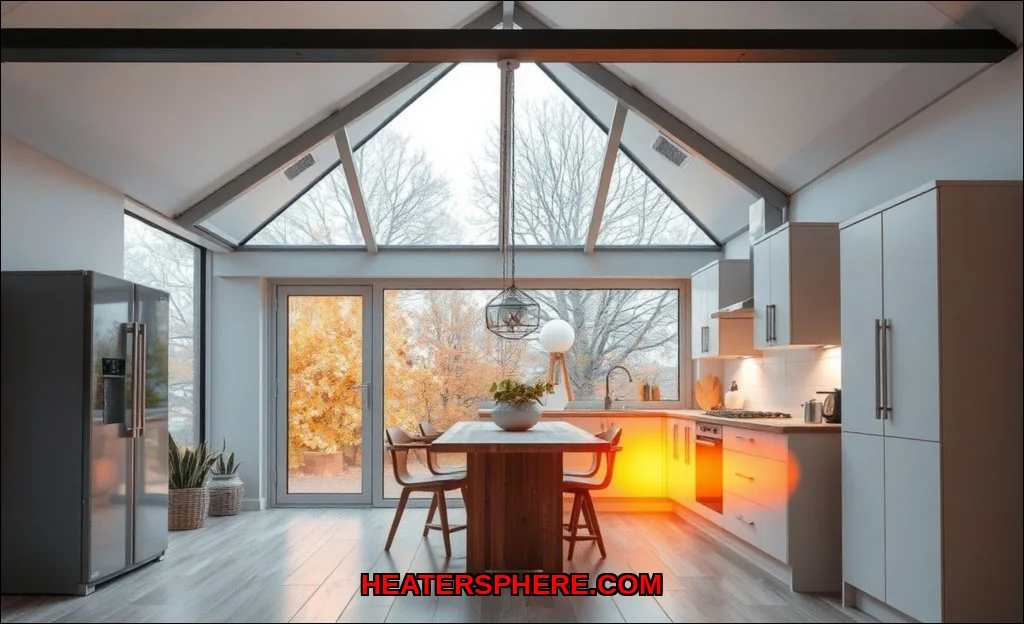
Your kitchen extension is supposed to be a bright, welcoming space. But if it’s always cold, it becomes a place you avoid. The problem often comes down to one thing: poor insulation. Single-skin brick walls, thin glazing, and uninsulated floors create a perfect storm for heat loss.
Heating a cold kitchen extension effectively requires a two-pronged approach. You need immediate solutions to make the space usable now and a plan for long-term improvements. Let’s tackle both, starting with what you can do today to feel the difference.
Why Your Kitchen Extension Feels So Cold
Before you buy a heater, understand the enemy. Older or budget-built extensions often lack modern insulation standards. The main culprits are drafts, single-glazed or poorly sealed windows, and uninsulated walls and floors. A significant issue is thermal bridging, where cold bypasses insulation through structural elements like metal window frames or where walls meet floors. We cover cold room solutions in its own guide.
This constant heat loss means your main central heating system works overtime, often failing to warm the space adequately. Your radiators might be on, but the warmth escapes almost as fast as it arrives. This is why targeted strategies are essential for a poorly insulated room.
Quick Wins: Immediate Steps to Retain Heat
You can implement these fixes this weekend. They won’t solve the root cause, but they will make a noticeable impact on comfort and your energy bills.
- Draft Proofing is Job One: Feel for drafts around doors, windows, and where services enter the wall. Use self-adhesive foam tape, brush seals, and silicone sealant. It’s the cheapest way to heat a drafty room more efficiently.
- Install Thermal Curtains or Blinds: Heavy, lined curtains act as a barrier over cold glass. Draw them as soon as it gets dark to trap heat inside. For a cleaner look, consider internal secondary glazingclear acrylic sheets that create an insulating air gap.
- Use Rugs and Floor Insulation: If you have a cold tile or stone floor, a thick rug is a simple insulator. For a more permanent but non-invasive fix, consider insulating the floor from below if you have a crawl space or cellar.
For instant, targeted warmth, a portable heater is your best friend. When choosing one for an uninsulated space, look for models with good thermostatic control to avoid wasting energy. A popular and efficient choice is the DREO Space Heater. Its oscillation and precise thermostat can help heat just the area you’re using, which is a smart tactic for managing a cold kitchen extension.
Targeted Heating Solutions for Poor Insulation
When your central heating can’t keep up, you need supplemental heat. The goal is efficient, localized warmth.
Choosing the Right Portable Heater
Not all portable heaters are equal for a challenging space.
- Oil-Filled Radiators: These provide a gentle, sustained heat that’s good for longer periods. They’re silent and retain heat well after switching off.
- Ceramic Fan Heaters: They heat up quickly and are excellent for fast warmth in a specific spot. Modern models often have cool-touch casings.
- Radiant Heaters: These work like the sun, warming objects and people directly in their line of sight. A radiant heater is fantastic for spot-heating where you sit or work, as it doesn’t waste energy heating the entire air volume of a drafty room.
For a deeper dive into selecting the right model, our guide on the best heater type for houses with poor insulation breaks down the pros and cons of each technology.
Integrating with Your Existing System
Can you make your central heating work better here? Possibly. If the extension has a radiator, ensure it’s sized correctly for the space (a professional can advise). Installing Thermostatic Radiator Valves (TRVs) allows you to control the heat in that room independently. For a more luxurious and effective permanent solution, electric underfloor heating mats under tile or stone provide consistent, rising warmth that counteracts cold floorsa common issue in ground-floor extensions.
Long-Term Fixes: Improving the Insulation Itself
This is where you solve the problem for good. While an investment, it pays back in comfort and energy efficient heating year after year. If that sounds like your room, read up on effective heating for historic homes next.
Walls: The Biggest Challenge
For a single-skin brick extension, you have two main options: internal or external wall insulation. Internal insulation (using materials like PIR board or natural sheep’s wool) is common but reduces room space slightly. External insulation wraps the outside of the wall, is highly effective at stopping thermal bridging, but requires planning permission and is more disruptive.
Windows and Doors
Double or triple glazing is the gold standard. If replacing isn’t in the budget, secondary glazing is a highly effective retrofit option that dramatically reduces heat loss through existing windows. It’s a key strategy for how to stop heat loss in a kitchen extension.
Roof and Floor
Don’t forget these surfaces. Insulating an extension’s roof (if it’s a flat or pitched roof) is critical. For suspended timber floors, insulation can be fitted between the joists. For solid concrete floors, a layer of rigid insulation board can be laid on top before a new screed and floor finish.
These major improvements can be complex. For similar challenges in below-ground spaces, the principles in our article on how to warm basements with poor insulation share useful overlapping strategies.
Managing Costs & Maximising Efficiency
Heating a poorly insulated space is expensive. Your strategy should focus on reducing demand first, then supplying heat efficiently.
Smart Habits for Reduce Heating Costs
- Heat only the extension when you’re using it. Close doors to keep warmth in.
- Use timers and thermostats religiously on both portable and central heating.
- Consider a thermal imaging survey to visually identify the worst areas of heat loss.
Planning and Investment
Prioritize improvements that offer the best return. Draft-proofing and thermal curtains are high-impact, low-cost. When planning major insulation work, check if you need to comply with current Building Regulations. An Energy Performance Certificate (EPC) assessor or a retrofit coordinator can provide a whole-house plan. For authoritative, unbiased advice on energy efficient heating and potential grants, the Energy Saving Trust’s guide to heating your home is an excellent resource.
| Solution Type | Timeframe | Relative Cost | Key Benefit |
|---|---|---|---|
| Draft Proofing & Thermal Curtains | Immediate | Low | Fast reduction in drafts & heat loss |
| Portable Radiant Heater | Immediate | Low-Medium | Instant, targeted personal warmth |
| Secondary Glazing | Short-term | Medium | Major window upgrade without full replacement |
| Wall/Roof/Floor Insulation | Permanent | High | Solves the root cause, adds value, slashes bills |
Transforming a cold kitchen extension from a fridge to a favourite room is absolutely achievable. Start with the quick, cheap fixes to gain immediate comfort. Use targeted, efficient heating for the medium term. Then, build a plan for the permanent insulation upgrades that will stop the problem at its source. Your future self, enjoying a warm coffee in a cozy space, will thank you for the effort.
