
You love the dramatic feel of a room with a slanted roofline. The soaring vaulted ceiling or cozy attic bedroom adds character and a sense of space. But come winter, that charm can come with a serious downside: it’s just harder to heat. You might find yourself constantly adjusting the thermostat, only to have your feet freeze while all the warm air pools uselessly near the peak. This isn’t just your imagination; it’s physics.
The good news is you can fix it. Heating a room with a high, sloped ceiling is a solvable puzzle. It requires a smart strategy that combines sealing, insulation, and targeted heating. For immediate relief while you work on long-term fixes, a focused supplemental heater can be a game-changer. A product like the DREO Space Heater is designed for efficient, safe spot-heating, making it a practical tool for taking the chill out of your angled space quickly.
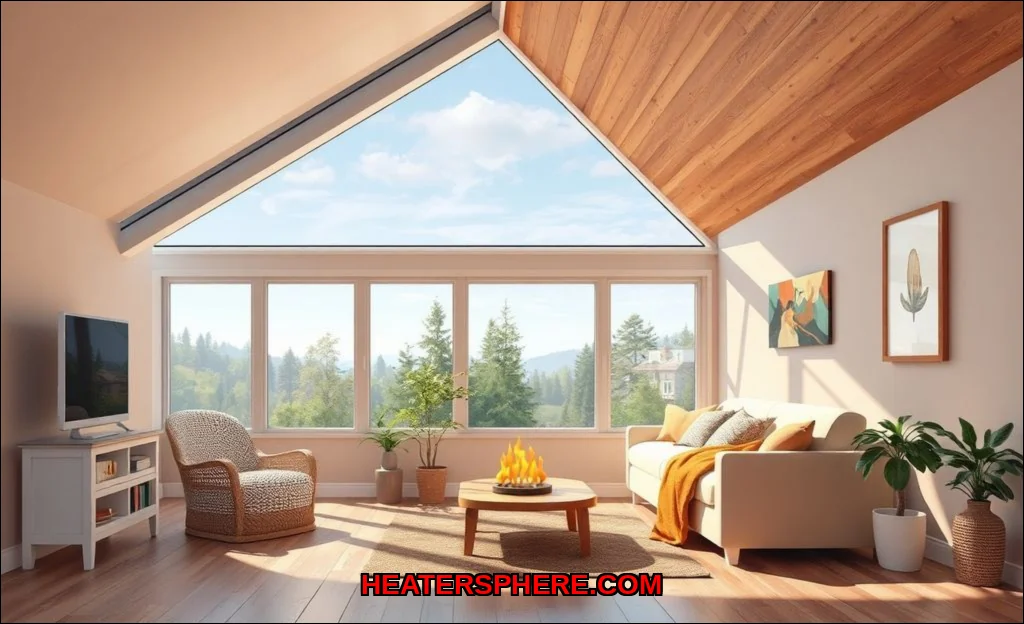
Why Slanted Roofs and High Ceilings Are Harder to Heat
It all boils down to one simple principle: warm air rises. In a standard room, the air circulates within a relatively compact box. In a room with a vaulted ceiling or sloped roof, the warm air has a much greater vertical distance to travel. It collects at the highest point, leaving the occupied space below feeling drafty and cold. This phenomenon is called thermal stratification.
Compounding this issue is often inadequate or poorly installed insulation in the sloped sections. Standard flat attic insulation methods don’t always translate well to angled rafters, leading to significant heat loss. the complex geometry can create pockets where cold air infiltrates and warm air escapes, a problem known as air sealing failure. Addressing these core issues is the first step to a warmer, more efficient room. The other half of this decision is cold garage bedroom tips.
Step 1: Assess and Improve Your Insulation
Before you spend money on more heat, stop the heat you’re paying for from escaping. Your sloped roof room’s insulation is its first line of defense.
Understanding Your Roof Structure
The method you use depends on your roof’s construction. Is it built with rafters (creating an open, usable attic space behind the ceiling) or roof trusses (where the triangular webbing occupies the space)? For rafter-framed cathedral ceiling insulation, you typically insulate between the rafters. With trusses, you might be limited to insulating the flat “attic” floor of the room below, which is less effective for the walls.
Choosing and Installing Insulation for Slopes
The goal is to create a continuous, unbroken thermal barrier. Key considerations include:
- Material Choices: Spray foam is often the gold standard for sloped ceilings as it expands to fill every crack, provides excellent R-value per inch, and acts as an air barrier. Rigid foam boards can be fitted between rafters, but require meticulous sealing at the seams. High-performance batts (like mineral wool) are another option but must be installed perfectly without gaps.
- Avoiding Thermal Bridging: This is a critical, often-missed entity. A thermal bridge is a pathway where heat flows easily through a more conductive material (like the wood rafters themselves). Even with insulation between rafters, heat can escape through the wood. Solutions include installing rigid foam over the entire rafter surface (creating a continuous layer) or using specialized insulation techniques that minimize this effect.
- Ventilation is Crucial: Never block the soffit and ridge vents if your roof is designed to be ventilated. Proper airflow prevents moisture buildup and ice dams. This often means creating a ventilation channel between the top of the insulation and the roof sheathing.
Figuring out how to stop heat loss in a room with a slanted roof starts right here. A well-insulated envelope makes every other heating method far more effective. For broader strategies on containing warmth, our guide on heat retention in homes with challenging layouts offers complementary principles.
Step 2: Optimize Your Primary Heating System
Your home’s central furnace or boiler might struggle with the unique demands of a tall room. Optimization is key.
Strategic Thermostat Management
If the thermostat is in the cold, sloped-roof room, it will run the system non-stop trying to reach the set temperature, overheating the rest of the house. If it’s located elsewhere, that room may never get a call for heat. Consider a smart or programmable thermostat with remote sensors. You can place a sensor in the problem room and have the thermostat average the temperature or prioritize that sensor during certain times.
Forced-Air System Adjustments
With ducted systems, ensure the vents in the room are fully open and unobstructed. Sometimes, partially closing vents in other, warmer rooms can help redirect airflow (but do this cautiously to avoid unbalancing the system). The ultimate solution might be adding a dedicated duct run or boosting the system’s fan speed for that zone, but consult an HVAC professional first. Before you buy anything, it is worth looking at warm a chilly stair landing.
The Radiant Heating Advantage
For sloped spaces, radiant heat for angled ceilings and floors can be exceptionally effective. Unlike forced air that heats the air (which then rises), radiant systems warm the objects and people in the room directly. Installing electric radiant mats under the floor or, in some cases, radiant heating panels on the walls counteracts the warm air rises problem at its source. It’s a comfortable, silent, and efficient option, especially as a primary or zonal heat source. You can explore various home heating system options on the Department of Energy’s website to understand the full spectrum.
Step 3: Use Supplemental Heating and Air Circulation Wisely
This is where you can make a huge immediate impact. The strategy is two-fold: destratify the air and add targeted warmth.
Harness Your Ceiling Fan
If you have a ceiling fan, use it in winter! Reverse its direction so it runs clockwise on a low speed. This gently pulls warm air down from the ceiling and pushes it outward along the walls, recirculating it back into the living space. This simple act of using ceiling fan direction winter mode is one of the most effective and cheapest ways to combat thermal stratification.
Choosing and Placing Supplemental Heaters
Supplemental heaters are ideal for attic room heating or occasional use. Placement is critical in an angled room. Don’t just put it in the middle. Place it where you spend timenear a desk, reading chair, or bed.
- Types: Oil-filled radiators provide steady, silent warmth. Ceramic heaters offer quick, focused heat. Infrared heaters warm objects directly, similar to radiant systems.
- Safety First: Always follow supplemental heater safety rules: keep it 3 feet from combustibles, plug directly into a wall outlet (no extension cords), and never leave it unattended. Look for models with tip-over and overheat protection.
So, should you use a space heater in a room with a vaulted ceiling? Absolutelyif you use it strategically as part of a broader plan, not as the sole solution. It’s one of the cheap ways to warm up a room with high sloped ceilings while you implement other fixes. For more on using auxiliary heat efficiently, see our article on improving heating efficiency in rooms with high ceilings.
Long-Term Solutions and Energy-Saving Considerations
Thinking bigger can lead to permanent comfort and lower bills. These investments address the root cause of why your sloped roof room [is] cold.
Advanced Insulation Upgrades
If accessible, consider adding insulation to the roof deck from the outside during a re-roofing project. Or, investigate insulating the “knee walls” (the short vertical walls in an attic room) and the floor of any unheated attic space behind them. Completing the thermal envelope is the goal.
Window and Door Upgrades
Rooms with slanted ceilings often feature skylights or dormer windows, which can be major weak points. Ensure they are double or triple-paned and properly weather-stripped. Thermal curtains or insulating cellular shades can make a dramatic difference at night.
System Zoning and Energy Efficient Heating for Tall Rooms
The most effective long-term solution is often to zone your heating system. This involves installing a separate thermostat and control valve or damper for the sloped-ceiling room. This allows you to heat that space independently to your desired comfort level without overheating the rest of the house. Its the definitive answer for the best way to heat a bedroom with a cathedral ceiling that’s part of a larger system.
Heating a room with a slanted roofline isn’t about cranking the thermostat. It’s a deliberate process of sealing the envelope, optimizing airflow, and applying heat intelligently. Start with the low-cost fixes: reverse your fan, use a safe supplemental heater strategically, and check for drafts. Then, prioritize insulation and air sealingthese provide the greatest long-term return. Finally, consider system upgrades like zoning or radiant heat for a permanent, comfortable solution. Your beautiful, dramatic room can be both stylish and wonderfully warm.
