
Your loft bathroom is freezing. You know the feeling. That sharp, damp cold that seems to seep from the walls and floor the moment you step out of the shower. It’s more than just discomfort; it’s a battle against condensation, mould, and wasted energy. This isn’t a minor inconvenienceit’s a problem that demands immediate and effective heating solutions for cold loft bathrooms.
Loft spaces are notoriously difficult to heat. They lose warmth rapidly through the roof and uninsulated spaces. Your beautiful loft conversion bathroom becomes the coldest room in the house. But you can fix this. You can create a warm bathroom in winter. The strategy is twofold: install dedicated heating and attack the root causes of heat loss. For a fast, portable boost while you plan permanent fixes, consider a DREO Space Heater. It’s a smart stopgap to take the edge off now.
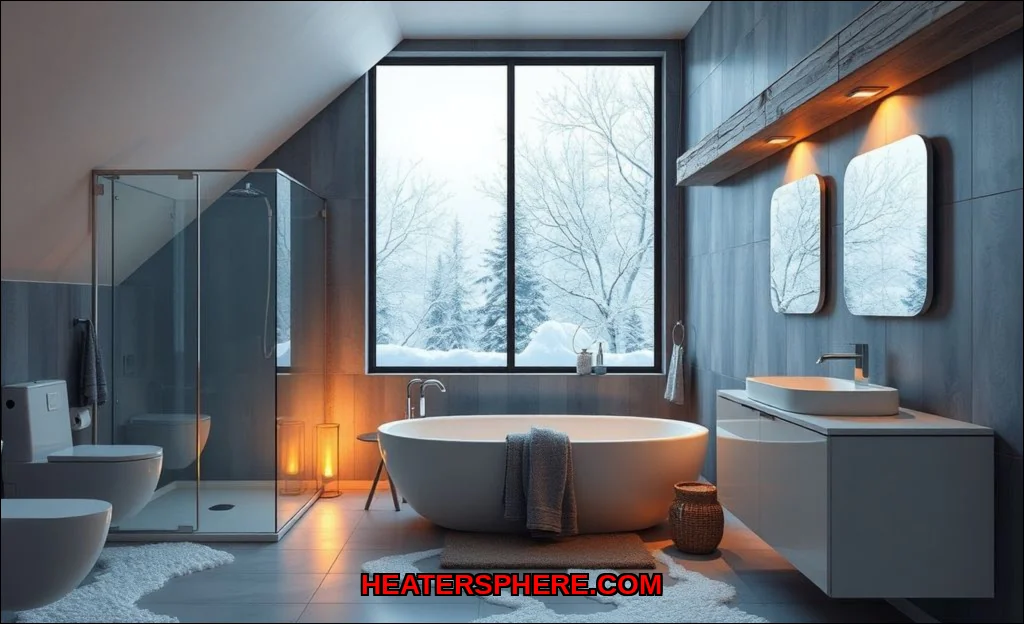
Why Your Loft Bathroom is Always Cold
You need to understand the enemy. Heat rises, but in a loft, it has nowhere to go but out. The primary culprits are poor insulation and a phenomenon called thermal bridging. This is where cold transfers directly through structural elements like joists and rafters. Your loft bathroom likely has multiple bridges.
Standard home heating systems often struggle to push warm air vertically into loft spaces. The pipe runs are long, and the radiator might be undersized. building regulations for bathroom heating in lofts require specific electrical zones and ventilation rates, which are sometimes overlooked. A space that feels perpetually chilly and harbours a high condensation risk. For the detail, see our notes on heating a windowless bathroom.
Immediate Fixes to Warm Your Bathroom Now
You don’t have to wait for a major renovation. Implement these steps today to raise the temperature.
- Seal the drafts. Check around windows, loft hatches, and pipe entries. Use draught-excluding tape or sealant. Every gap sealed is cold air stopped.
- Control your ventilation. Run your bathroom extractor fan during and for at least 15 minutes after a shower. Better yet, install an extractor fan timer or humidity sensor. This removes moist air without letting the room cool down unnecessarily.
- Use a dedicated portable heater. A safe, bathroom-appropriate radiant heater or ceramic fan heater can provide instant, targeted warmth. It’s the cheapest way to heat a cold bathroom in winter while you assess permanent options.
- Add a thick bath mat. It sounds simple, but a cold floor drains heat from your feet instantly. A good mat provides a crucial thermal barrier.
Quick-Win Product: The Electric Towel Rail
This is your first major upgrade. A heated towel rail serves a dual purpose. It warms towels and acts as a secondary heat source. For a small loft bathroom, it can be the best heating solution. Electric models from brands like Myson are easy to install; they don’t need connecting to your central heating. Just wire it to a fused spur. You get constant, gentle warmth and dry, fluffy towels.
Permanent Heating Solutions for Loft Bathrooms
Now for the long-term fixes. These investments will transform your space from frigid to fabulous.
Underfloor Heating: The Ultimate Luxury
Installing underfloor heating in a loft bathroom is a game-changer. It provides even, radiant heat from the ground upexactly where you need it. Electric underfloor heating mats, from brands like Warmup or DEVI, are ideal for retrofits. They’re thin and go directly under tiles or vinyl. The system is controlled by its own thermostat, allowing you to schedule warmth for your morning routine. It’s the pinnacle of energy efficient bathroom heating for the space.
Optimizing Your Radiator
If you have a central heating system, your existing bathroom radiator might be inadequate. Consult a heating engineer. They can perform basic heat loss calculations for lofts to determine the required BTU output. Often, upgrading to a larger double-panel convector radiator solves the problem. Ensure it’s fitted with thermostatic radiator valves (TRVs) for precise control.
Smart Integration for Modern Comfort
Don’t overlook control. Modern systems can integrate with smart home ecosystems. Imagine a heated towel rail that turns on 30 minutes before your alarm, or electric underfloor heating activated by a geofence when you start your commute home. Programmable thermostats prevent energy waste and guarantee a warm bathroom on demand. This is a key missing entity many overlook. If that sounds like your room, read up on heating a loft bedroom with skylights efficiently next.
Essential Insulation & Ventilation Strategies
Heating is pointless if the warmth escapes instantly. Your insulation and ventilation must work as a team.
Winning the Insulation Battle
Loft insulation bathroom upgrades are non-negotiable. Focus on the areas you can access:
- Between and over the rafters: Use rigid insulation boards or high-performance foam. This is critical for the sloping ceiling.
- Within stud walls: If your bathroom has built-out walls, ensure they are fully packed with insulation.
- The floor: Insulate between the joists of the bathroom floor to stop heat sinking into the rooms below.
This comprehensive approach tackles thermal bridging and dramatically improves thermal efficiency.
Ventilation: Your Weapon Against Damp
Warm, moist air meeting cold surfaces causes condensation. That leads to damp and mould. Your ventilation system is your primary defence. As mentioned, a timed or smart bathroom extractor fan is essential. For a more advanced solution, consider a Positive Input Ventilation (PIV) system or a whole-house MVHR (Mechanical Ventilation with Heat Recovery). These systems manage airflow throughout the home, reducing the condensation risk in your loft bathroom specifically. For related heating challenges in other parts of a converted loft, see our guide on the best heater type for cold loft landing areas.
Action Plan: Prioritize Your Heating Upgrades
Don’t get overwhelmed. Follow this step-by-step plan to systematically conquer the cold.
- Assess and Seal (This Weekend): Hunt for drafts. Seal them. Install a timer for your extractor fan.
- Implement Temporary Heat (Next Week): Source a safe portable heater for immediate relief.
- Plan Your Permanent Heating (Month 1): Decide between a premium electric underfloor heating system or an upgraded heated towel rail/radiator. Get quotes.
- Address Insulation (Month 2-3): This is the most impactful long-term upgrade. Prioritise rafter and wall insulation. For detailed energy-saving strategies applicable to your whole home, the Energy Saving Trust’s guide to heating your home is an excellent resource.
- Install and Integrate (Month 3-4): Have your chosen heating system professionally installed. Set up smart controls for ultimate efficiency and comfort.
Making the Right Choice for Your Space
Your final decision hinges on budget, bathroom size, and usage. Use this simple table to compare your core options:
| Solution | Best For | Key Consideration |
|---|---|---|
| Electric Underfloor Heating | Luxury feel, even heat, primary heating for small bathrooms | Higher installation cost, requires floor covering removal |
| Heated Towel Rail (Electric) | Secondary heat & towel drying, easy retrofit, best heating for a small loft bathroom | Not usually sufficient as sole heat source for larger rooms |
| Upgraded Central Heating Radiator | Homes with existing effective central heating systems | Requires adequate system pressure and boiler capacity |
| High-Output Electric Radiator | Precise, room-by-room control without plumbing | Running costs can be higher than gas central heating |
Sometimes, the issue is simply getting heat to the space quickly. If that’s your core challenge, our analysis of the best heater for fast heating cold office rooms applies similar principles of rapid response.
Your cold loft bathroom is a solvable problem. Start with the quick fixes you can do todayseal drafts, control ventilation, use targeted heat. Then, commit to a permanent solution. Invest in proper loft insulation bathroom techniques and a dedicated heating system like underfloor heating or a powerful towel rail. Remember, the goal isn’t just warmth; it’s creating a durable, efficient, and comfortable space that adds value to your home. Stop shivering. Start planning. Take back your bathroom.
