
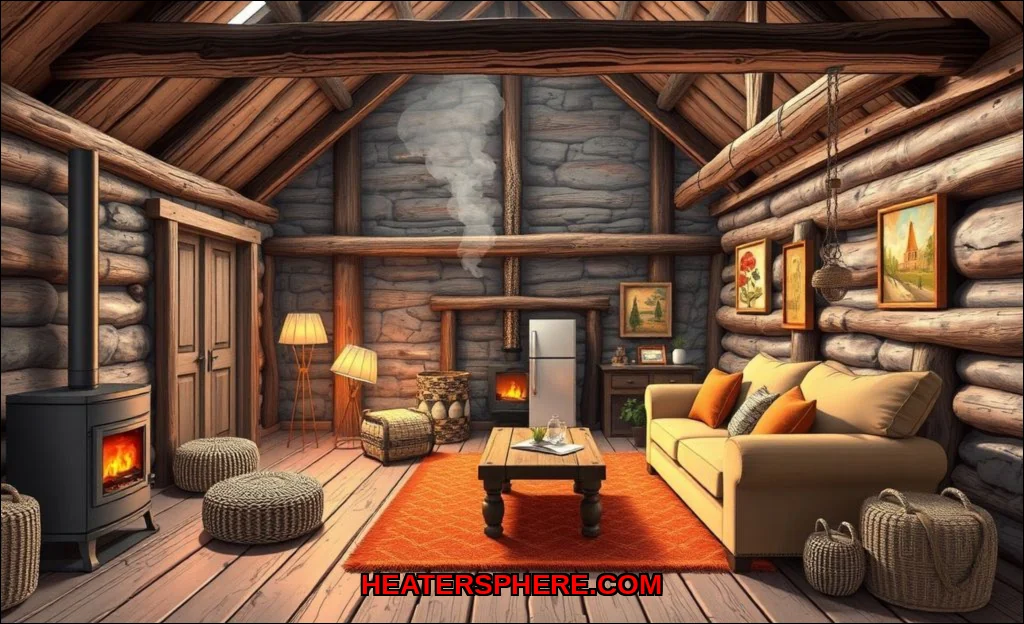
Heating a converted barn or a room with rustic character presents a unique set of challenges. You’re not just trying to get warm; you’re aiming to create a cozy, inviting space that honors the building’s original charm. The high ceilings, exposed stone walls, and beautiful timber beams that give these spaces their soul are often the very things that make them difficult and expensive to heat efficiently.
Your goal is to find a balance between modern comfort and timeless aesthetics. It’s about choosing a heating system that tackles the scale and specific heat loss issues of your space while looking like it belongs there. For a quick, supplemental heat boost in a specific zone, a portable infrared heater can be surprisingly effective. Many owners of draughty rooms find a product like the Dr Infrared Heater useful for taking the chill off a seating area without needing to fire up the whole system.
The Core Challenge: Why Your Rustic Space Feels Cold
Before you choose a heater, you need to understand the enemy: heat loss. Old stone buildings and barn conversions often have inherent features that work against you.
- Thermal Mass: Stone and brick walls absorb heat slowly and release it slowly. This can be an asset once warm, but it means your heating system has to work hard and long to raise the temperature initially.
- Poor Airtightness: Gaps around original doors, windows, and between floorboards create constant draughts. Cold air infiltration is a major culprit in heating old stone buildings.
- Thermal Bridging: This is a technical term for a cold spot where heat escapes easily. Exposed steel beams or concrete floor slabs that connect the inside to the outside act like a “thermal bridge,” sucking warmth from your room.
- Minimal Insulation: Original structures were rarely built with modern insulation standards. The roof and walls are typically the biggest sources of heat loss.
Addressing these issues is the non-negotiable first step. No heating system, no matter how powerful, will be cost-effective or comfortable if it’s fighting a losing battle against a leaky building envelope. There is more on keeping upstairs landings warm in a guide of its own.
The Critical First Step: Insulation and Draught Proofing
Adopt a fabric first approach. This means improving the building’s shell before you even think about boilers or heat pumps. It’s the most effective way to achieve efficient heating for large rooms.
Key Areas to Target
- Roof/Attic Space: This is your top priority. Heat rises, and an uninsulated roof lets it escape instantly. Adding substantial insulation here offers the best return on investment.
- Walls: Insulating solid stone walls is complex but possible. Options include internal insulation (which reduces room space) or external insulation (which changes the exterior look). Professional advice is essential here.
- Draught Proofing: Seal gaps around windows, doors, and loft hatches. Use brush seals and draught excluders. It’s the cheapest and fastest way to feel a difference and is central to solving how to stop a barn conversion being cold.
- Floors: Insulating under suspended timber floors can stop cold air rising into the room.
For truly airtight spaces, consider a Mechanical Ventilation with Heat Recovery (MVHR) system. It provides constant fresh air while capturing up to 90% of the heat from the outgoing stale air, a game-changer for air quality and efficiency in a well-sealed home.
Heating System Options for Your Converted Barn
With a tighter building fabric, you can now choose a heating system that matches your needs, budget, and style. Here are the main contenders for heating a barn conversion.
1. Wood Burners and Stoves (The Character Choice)
A wood burning stove or log burner is the quintessential character heating solution. It provides intense, localized radiant heat that warms people and objects directly, perfect for creating a warm rustic living room focal point.
Pros: High aesthetic value, works during power cuts, can be very efficient with modern models, uses a renewable fuel source.
Cons: Heats a localized zone (not the whole open plan area), requires fuel storage and manual operation, needs a lined chimney (consider a thermal liner for safety and efficiency). The other half of this decision is energy efficient heating solutions for your home.
Best for: Supplemental heat and atmosphere in main living areas. Not a whole-house solution for most large barns.
2. Underfloor Heating (The Comfort Choice)
Underfloor heating provides gentle, even warmth from the ground up. It’s ideal for spaces with stone or tile floors and eliminates the need for visible radiators.
Pros: Excellent comfort (warm feet!), invisible, works well with heat pumps and solar thermal, eliminates cold draughts along floors.
Cons: High installation cost, slower to respond than radiators, can be complex to retrofit in existing floors.
Best for: New extensions or full renovations where the floor structure can be accessed. A top choice for consistent background heat.
3. Heat Pumps (The Efficiency Choice)
An air source heat pump extracts heat from the outside air (even in winter) and upgrades it to heat your home. It’s the cornerstone of modern, low-carbon heating.
Pros: Extremely high system efficiency (can deliver 3-4 units of heat for every 1 unit of electricity used), low running costs, provides both heating and cooling, eligible for government grants.
Cons: High upfront cost, works best with well-insulated homes and low-temperature emitters like underfloor heating or large radiators.
Best for: Well-insulated barns where you’re planning a whole-house system. It requires careful design to work effectively in very large, open volumes. For more on efficient electric heating options, our guide on the best heater type for warming garage converted rooms covers similar principles.
4. Biomass Boilers
These burn wood pellets, chips, or logs to provide central heating and hot water. Think of it as a whole-house version of a wood burner.
Pros: Uses renewable fuel, can be very cost-effective if you have a cheap local fuel source, good for large heat demands.
Cons: Requires significant space for the boiler and fuel storage, needs regular fueling and ash removal, higher upfront cost than gas/oil boilers.
Best for: Large, off-grid properties with space for fuel storage and a ready supply of biomass.
5. Modern Radiators & Electric Heaters
Don’t dismiss updated versions of classic systems. Modern column radiators can suit an industrial-rustic aesthetic. For fast, zonal heat, efficient electric panel heaters or infrared models are useful. When you need heat in a hurry, the principles in our article on the best heater for fast heating cold office rooms apply here too.
Blending Heat Sources with Rustic Decor
Your heating shouldn’t clash with your decor. It should enhance it. This is where rustic room heating ideas that look good come into play.
- Stove as Centerpiece: Choose a classic cast-iron or modern minimalist stove. Surround it with a beautiful stone or slate hearth.
- Radiator as Feature: Opt for traditional column radiators in a dark matte finish or brushed steel. They look purposeful and industrial.
- Conceal Modern Systems: Use discreet grilles for underfloor heating or MVHR systems. The technology is hidden, leaving the character exposed.
- Complement with Textiles: Heavy curtains over doors, thick rugs on stone floors, and upholstered furniture all add to the thermal comfort and aesthetic.
Making Your Decision: Cost, Efficiency & Practicality
So, what is the most cost effective heating for a converted barn? The answer isn’t simple. It depends on your starting point.
| Consideration | Questions to Ask |
|---|---|
| Upfront Budget | Can you invest in insulation and a heat pump now for long-term savings, or do you need a lower-cost initial solution like a wood stove? |
| Running Costs | Compare fuel prices (electricity, wood, pellets, oil). Factor in the efficiency of the appliance. A guide like the one from Energy.gov on home heating systems is a great resource for understanding efficiency metrics. |
| Practicality | Do you want fully automatic heating, or are you happy managing a wood supply? Do you have space for a biomass hopper or an outdoor heat pump unit? |
| Future-Proofing | Consider regulations and home value. Heat pumps and high-efficiency systems are increasingly desirable. |
Often, the best solution is a hybrid system. You might combine:
- A heat pump or biomass boiler for whole-house background heat (via underfloor heating).
- A wood burning stove in the main living area for cozy evenings and backup.
- Strategic electric heaters in rarely used rooms or for quick boost heating.
Heating your rustic space is a puzzle with multiple pieces. Start with the building itselfinsulation and draught-proofing are not optional extras. They are the foundation of any effective system. Then, layer your heating solutions. Choose a primary system for overall comfort and supplement it with characterful, zonal heat where you need it most. By respecting the building’s past while embracing smart, modern technology, you can create a space that is both beautifully authentic and wonderfully warm. The result is a home that feels as good as it looks.
