
Your conservatory is a beautiful space. Until winter arrives. Then it can feel like an icebox, especially on freezing nights. You’re not alone in wondering how to stop a conservatory getting so cold. The good news is you have options, from quick fixes tonight to smarter investments for next winter.
This guide walks you through practical heating ideas for conservatories. We’ll cover immediate solutions you can implement right now, long-term insulation improvements, and how to choose heaters that are both safe and efficient. You’ll learn how to tackle condensation, reduce heat loss, and create a space you can actually use year-round.
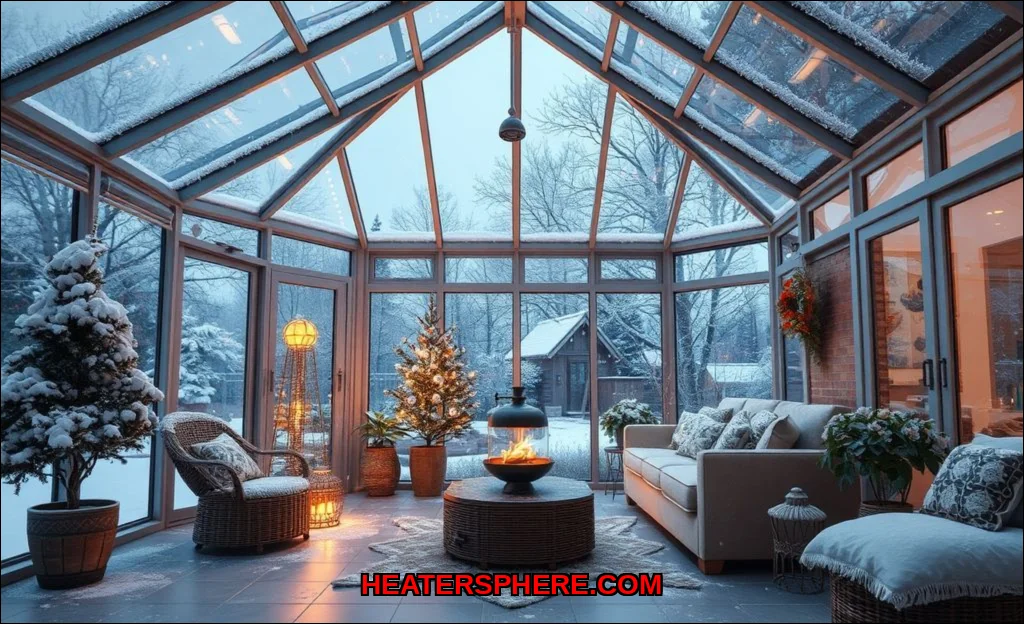
Why Your Conservatory Turns Into a Freezer
Your conservatory loses heat fast because glass and polycarbonate roofs have poor insulation and no thermal mass to store warmth. Heat escapes through single-glazed windows and uninsulated roof panels, making walls feel cold and causing drafts. This rapid heat loss causes the temperature to drop quickly after sunset, turning your conservatory into a chilly space. Condensation on cold glass surfaces adds to the damp, cold feeling inside. Readers in this position usually ask about keep conservatory warm as well.
Another key factor is air leakage. Gaps around doors, windows, and where the structure meets the house let warm air out and cold drafts in. This constant exchange makes your heating efforts feel futile. It’s a battle against physics, but one you can win with the right strategy. For more foundational tips on battling the chill, our guide on how to keep warmth inside during freezing frost nights offers excellent principles that apply here.
Immediate Solutions for Tonight’s Freeze
You need warmth now. These tactics can make a difference in just a few hours, focusing on trapping the heat you already have and adding targeted warmth.
Seal the Drafts First
Before you even turn on a heater, stop the drafts. This is the most cost-effective step you can take. Feel for cold air around window frames, doors, and vents. Use self-adhesive foam tape or rubber draught-proofing strips to seal these gaps. Don’t forget the keyhole and letterbox if your conservatory has an external door. A simple draught excluder placed along the bottom of doors works wonders.
Choose and Place Your Heater Wisely
For temporary heating, portable electric heaters are the go-to. But which type? For a cold conservatory, oil-filled radiators are often a safe, steady choice. They provide gentle, convection-based heat that’s good for maintaining a background temperature. However, for quickly taking the edge off a specific spot, a fan heater or a radiant heater is faster.
If you’re looking for a compact, efficient option that’s easy to move around, many find success with a model like the FLANUR Space Heaters. Its portability makes it ideal for shifting heat to where you’re sitting. Remember, never leave portable heaters unattended and keep them clear of furniture and curtains.
Create a Thermal Barrier
Your windows and roof are the biggest sources of heat loss. Create a temporary barrier. Heavy blankets or specially designed thermal curtains can be hung over glass areas at night. For a super cheap hack, bubble wrap lightly misted with water will stick to single-glazed windows, creating an insulating air pocket. It’s not pretty, but it works in a pinch to provide frost protection for your plants and space.
Long-Term Insulation Improvements
For a permanent solution, you need to upgrade the conservatory itself. These investments pay off in comfort and lower heating bills over time. We go through warm up wood floors step by step in a separate article.
Upgrade Your Glazing and Roof
If you have single-glazing, upgrading to double or even triple-glazed units is the single most effective improvement. For a polycarbonate roof, consider replacing it with a solid tiled roof or a hybrid system with internal insulated panels. This dramatically reduces heat loss. A more budget-friendly roof solution is applying thermal lining paper or specialized insulating panels directly to the inside of the existing roof.
Invest in Purpose-Built Window Dressings
Move beyond blankets. Install proper thermal blinds or insulated shutters. Look for products with a reflective backing that faces the glass. These not only keep heat in at night but can reflect solar gain back out in summer. Proper thermal curtains, full-length and lined, are another excellent layer of defense against a winter conservatory chill.
Consider Underfloor Heating
For a luxurious and efficient solution, electric underfloor heating mats are worth exploring. They provide gentle, radiant heat that rises evenly, eliminating cold spots. This is particularly effective for tiled conservatory floors. It’s a more involved installation but solves the problem of conservatory heating from the ground up.
Choosing the Right Heater: Safety & Efficiency
Picking a heater isn’t just about wattage. You need to match the type to your conservatory’s use, size, and insulation level.
| Heater Type | Best For | Key Considerations |
|---|---|---|
| Oil-Filled Radiator | Background, all-night heating; larger spaces. | Safe, silent, and retains heat after turning off. Slow to warm up. Often the answer to “are oil filled radiators safe for conservatories?” generally, yes. |
| Ceramic Fan Heater | Rapidly heating a small area for short periods. | Fast, directional heat. Can be noisy. Ensure it has tip-over and overheat protection. |
| Infrared/Radiant Heater | Heating people and objects directly, not the air. | Instant, silent heat. Efficient for spot heating. Doesn’t warm draughty air, so ideal for poorly insulated spaces. |
| Electric Panel Heater | Wall-mounted, permanent supplementary heating. | Slim, out-of-the-way. Good for maintaining a set temperature with a thermostat. |
Always look for heaters with thermostats and timers. This prevents energy waste and allows you to schedule warmth for when you need it. For detailed safety and efficiency advice on home heating, the Energy Saving Trust’s guide to heating your home is an authoritative resource.
Cost-Effective Tips to Retain Heat
Heating is one thing. Keeping that heat in is another. Combine these habits with your hardware for the best results.
- Zone Your Heating: Only heat the conservatory when you’re using it. Close the door to the main house to prevent warm house air from escaping into the cold space.
- Use Rugs and Carpets: A thick rug adds insulation to a cold tiled or stone floor, making the room feel instantly warmer.
- Manage Condensation: Wipe down windows in the morning. Use a dehumidifier to remove damp air, which is harder to heat. This is a key part of how to reduce condensation in a cold conservatory.
- Let the Sun In: On sunny days, open any thermal curtains or blinds to allow free solar heating. Close them tightly as soon as the sun sets to trap the warmth.
These strategies mirror techniques used in other scenarios where heat retention is critical, such as the heat retention ideas for night shift sleepers who need to sleep during a cold day.
Your Warmer Conservatory Awaits
Transforming your cold conservatory into a usable winter room is absolutely achievable. Start with the quick wins: seal the drafts, deploy a safe portable heater, and hang temporary insulation. This will show you what’s possible. Then, plan your long-term attackswhether that’s investing in thermal blinds, improving roof conservatory insulation, or installing a more permanent electric heater for conservatory use.
The goal isn’t to make it as warm as your living room. It’s to take the harsh edge off the cold, protect your plants, and create a space you can enjoy for more months of the year. With a layered approach, you’ll find the best way to heat a conservatory in winter cheaply and effectively. Your frosty nights are about to get a lot more comfortable.
