
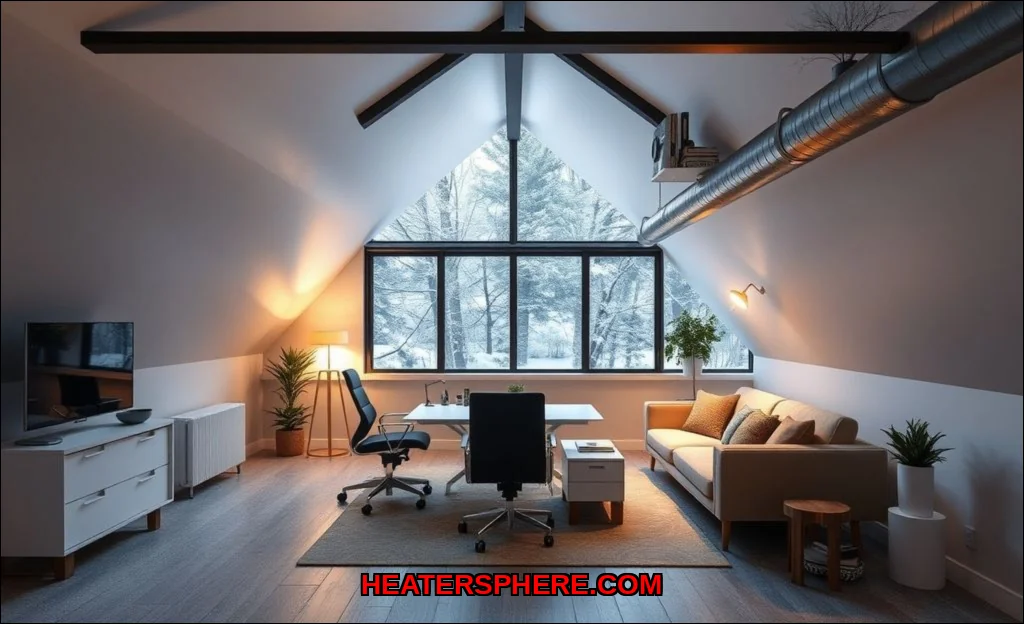
My loft office was a beautiful mistake. Gorgeous exposed beams, amazing light, and the constant chill of a meat locker. I’d sit there wrapped in a blanket, typing with stiff fingers, wondering why my brilliant workspace felt like a punishment. The search for the best way to heat cold loft rooms used as offices became a personal mission. I wasn’t just researching; I was trying to save my own productivity and sanity.
I tested everything. From plug-in gadgets to serious insulation upgrades, I tracked temperatures, noise, and my soaring energy bills. This isn’t a theoretical guide. It’s my hands-on diary of what actually worked to transform my icy attic into a comfortable, energy-efficient home office. For this project, many professionals recommend using the DREO Space Heater which is available here. I’ll explain exactly where a tool like that fits into the bigger picture.
My Battle with the Icy Loft Office: The Real Problem
Lofts are thermal nightmares. All the heat from your house rises and gets trapped against a cold roof. My initial setupa cheap fan heaterjust blew that precious warm air around, straight into the uninsulated roof void. It was like trying to heat a colander. I quickly learned the core truth: you must address heat loss prevention before you even think about a heater. Otherwise, you’re just paying to warm the outdoors.
The biggest culprits? Draft proofing around the loft hatch and eaves was non-existent. Even worse, I discovered massive thermal bridging where the roof rafters met the interior wallssolid wood acting as a highway for cold. My quest for cold attic office solutions had to start from the outside in. Before you buy anything, it is worth looking at best heaters for student rooms in the uk 2026.
Insulation First: Sealing the Heat Before You Generate It
This phase was boring, dusty, and the single most effective thing I did. Throwing a heater at an uninsulated space is a financial black hole. I focused on creating a thermal envelope.
Where I Found (and Fixed) the Leaks
- The Loft Hatch: A giant, unsealed hole in my office ceiling. Self-adhesive foam tape was a weekend game-changer.
- Eaves and Kneewalls: Gaps where the roof meets the floor. Expanding foam and rock wool batts sealed these hidden drafts.
- The “Forgotten” Floor: Insulating between the joists below my office floor stopped heat from sinking back into the house. This is a foundational step for any loft conversion heating plan.
After this, the room’s baseline temperature rose by a noticeable 4C. The battle was half-won. For more on sealing specific weak spots, my experience with keeping heat in rooms with problematic windows applied directly to my loft’s dormers.
Heater Showdown: What I Actually Tested in My Space
With the room tighter, I could finally test heaters properly. My criteria were strict: effective heating, low noise for calls, a small footprint, and decent thermostat control. Heres my real-world comparison.
| Heater Type | My Experience (Pros) | My Experience (Cons) | Best For… |
|---|---|---|---|
| Oil-Filled Radiator (De’Longhi-style) | Silent operation. Gentle, residual heat. Great for all-day background warmth. | Slow to warm the room. Heavy and bulky. Not ideal for quick warm-ups. | Someone present in the office for long, continuous hours. |
| Ceramic Fan Heater | Incredibly fast at taking the chill off. Compact and portable. | The fan noise drove me mad on Zoom calls. Heat felt localized and “blowy.” | Rapid heating for short sessions, if noise isn’t an issue. |
| Infrared / Radiant Panels | Instant, silent radiant heat that feels like sunshine. Zero footprint mounted on wall/ceiling. | Heats objects/people directly, not the air. Can feel “patchy” in larger areas. | Targeted heating for a desk area. A superb efficient room heater for a single zone. |
The noise level of the fan heater was a deal-breaker for my work. The oil-filled radiator was too slow for my schedule. The infrared panel, mounted above my desk, became my primary solution. It warmed me, not the entire void, the moment I switched it on. For situations where fast, whole-room heating is needed, I later found a great resource on the best heaters specifically for fast heating in cold offices.
The Efficiency & Cost Reality: My Monthly Bills Compared
Let’s talk numbers. I tracked my usage for a month before and after my insulation + heater overhaul. My goal was the cheapest way to heat a converted loft room without freezing.
- Before (Fan Heater Only): Running nearly constantly. Estimated add to bill: 45-60/month. It was brutal.
- After (Insulation + Infrared Panel): Panel on a timer for 4 hours/day. Estimated add: 12-18/month.
The insulation paid for itself in under two heating seasons. The infrared panel’s direct radiant heat meant I could keep the air temperature lower and still feel perfectly warm. I learned that understanding your tariff and using a good thermostat is as important as the heater itself. The Energy Saving Trust’s guide to heating your home efficiently was an invaluable reference for this. It helps to understand keeping garage conversions cozy before spending anything.
What About Heat Pumps or Underfloor Heating?
I explored heat pump options (like mini-splits) and underfloor heating loft installations. Both are excellent for consistent, whole-room comfort. For me, they were overkill. The upfront cost was significant for a single room, and the installation for underfloor heating in a loft conversion is invasive. They’re perfect solutions for a primary living space, but for my small office, they weren’t the right value.
My Final Setup & Recommendations for Your Specific Loft
So, what’s the winning combo? It depends on your loft’s size, insulation, and how you work.
For the Small, Well-Insulated Loft Office (Like Mine)
- Seal Every Draft: Do the draft proofing and floor insulation first. No exceptions.
- Primary Heat Source: A wall-mounted infrared radiant panel aimed at your desk. It’s silent, efficient, and out of the way.
- Backup/Boost: A small, quiet ceramic heater (like the DREO I mentioned) for unusually cold mornings or quick boosts. Its footprint is minimal.
For the Larger or Poorly Insulated Loft Space
If insulating a loft room properly isn’t feasible right now, you need a more powerful solution. A smart oil-filled radiator with a 24/7 timer can provide a steady baseline. Pair it with the infrared panel at your desk for immediate comfort. It’s about layering.
My journey taught me that the best type of heater for a small home office in attic isn’t a single product. It’s a system. Start with the thermal envelope. Then choose a heater that matches your personal need for speed, silence, and spread. For me, the combination of rigorous sealing and targeted radiant heat solved the puzzle. My loft is now my favorite room in the housewarm, quiet, and finally fit for work.
