
I spent last winter in a constant battle with my living room. The central heating worked fine, but a single vent near the floor pumped out a relentless stream of cold air. It felt like a personal insult. A blanket wasn’t enough. Cranking the thermostat just made the rest of the house a sauna while my feet froze. I knew I needed a specific solution, a heater that could stand its ground right where the cold air invaded.
After testing half a dozen models in that exact spot, I learned this isn’t a job for any generic portable heater. You need a tool that fights the draft on its own terms. For a focused, immediate solution, the DREO Space Heater became my go-to for its precise, oscillating warmtha real contender in this fight. But let me walk you through what actually worked, and why.
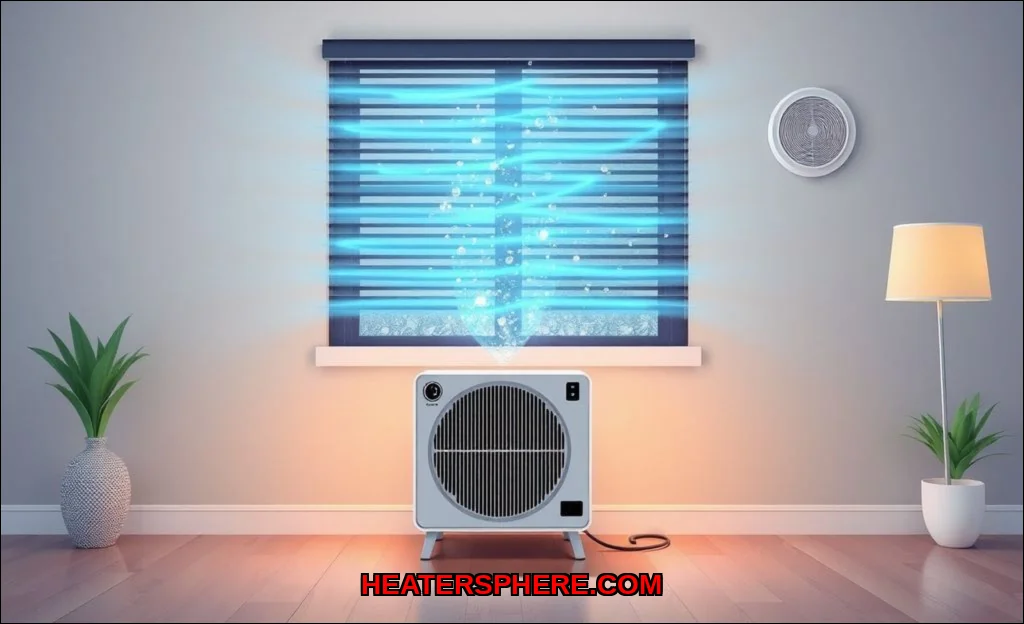
My Battle with the Cold Air Vent & What Actually Worked
My first mistake was thinking all heat was equal. I grabbed a basic fan heater. It blew warm air directly at me, which felt nice until the cold draft from the vent cut right through it. The warm air just dissipated. I was heating the room, but not the problem. This is the core issue with cold draughts: they create localized zones of discomfort that general room heating struggles to fix. You don’t just need warmth; you need a strategic barrier.
The breakthrough came when I stopped fighting the vent’s location and partnered with it. I placed heaters not across the room, but strategically between the vent and where I sat. The goal wasn’t to overpower the central system, but to create a thermal curtain effect. Think of it as building a wall of warmth that the cold air has to penetrate. It changed everything. If that sounds like your room, read up on best heaters for static caravans in winter next.
Why This Problem Needs a Specific Type of Heater
Combating cold air from vents is about physics, not just power. You’re dealing with a concentrated stream of cold, often at floor level. A heater that slowly warms the entire air mass in the room (convection) will lose to that direct, focused cold draught. You need speed and precision.
Heres what I found matters most:
- Targeted Heat: The ability to direct warmth exactly where the draft hits.
- Fast Response: Heat you feel immediately, not after 20 minutes.
- Stability: A heater that can run safely for hours without worry.
- Efficiency: Minimizing energy waste while solving a localized problem.
This ruled out some popular types right away. Slow, whole-room heaters like traditional oil-filled radiators were often too passive. They’re great for consistent background warmth, but too slow to react to a sudden influx of cold air from an AC or vent. For a similar challenge in rooms with persistent cold corners, the principles of placement are equally vital, as explored in our guide on the best heater for rooms with cold corners.
Putting Them to the Test: How Different Heaters Handled the Draft
I moved four main types into the line of fire: a ceramic fan heater, an oil-filled radiator, an infrared heater, and a convection panel. The differences were stark.
| Heater Type | Performance Against Draft | My Hands-On Experience |
|---|---|---|
| Ceramic Fan Heater (like the DREO) | Fast, directable warm air. Good for cutting through the draft quickly. | The oscillation feature was a game-changer. It spread a wider barrier of warmth. Felt like a quick-response team. |
| Oil-Filled Radiator (e.g., De’Longhi) | Slow, radiant warmth. The draft often “won” in the direct path. | Soothing, silent heat for after the draft is blocked. Too slow as a first responder. Great for maintaining temperature once achieved. |
| Infrared / Radiant Heater | Instant radiant heat that warms objects, not air. Excellent for the direct spot. | If the draft hit my legs, pointing this at them provided instant relief. It ignored the cold air entirely and warmed me directly. Perfect for a stationary seat. |
| Convection Panel Heater | Gentle, whole-room air warming. Easily disrupted by the cold stream. | Felt like it was working hard for little gain in the draft zone. The cold air just mixed with its output. |
The test revealed a critical missing piece in most reviews: heat dispersion vs. a cold air stream. A fan heater’s forced air could push back against the draft. Radiant heat from an infrared model could bypass it completely. The silent, ambient warmth from an oil-filled radiator, however, was simply pushed aside. This direct comparison is what most buyers miss.
The Winner & Why It Earned Its Spot by the Vent
For my specific scenarioa living room where we moved aroundthe ceramic fan heater with oscillation took the crown. Heres why.
It provided the perfect blend of immediacy and coverage. With a strong fan, it projected warmth several feet, creating that essential thermal barrier. The oscillation meant it could cover a wider area affected by the vent’s draft, not just a single chair. A precise digital thermostat control let me set it to maintain just the right level of extra warmth, so it wasn’t running full-blast constantly. It helps to understand best heaters for a small, cold garden office before spending anything.
While brands like Dimplex and Pro Breeze make solid units, the model I kept coming back to was the DREO Space Heater. Its 90 oscillation and multiple heat/speed settings allowed me to customize the defense perfectly. It became my dedicated draft-buster. For a stationary spot like a desk, however, a focused infrared heater would have been my undisputed choice. Its all about matching the tool to the specific nature of your drafty room.
Key Lessons on Placement, Safety, and Cost for Your Drafty Room
Choosing the right heater is only half the victory. Using it correctly is the other.
Real-World Placement Strategies
Forget putting the heater next to your couch. Place it between the cold air vent and your living space. I positioned mine about 3-4 feet from the vent, angled slightly so its oscillating warmth swept across the draft’s path. This created the barrier. Its less about pointing it at you and more about pointing it at the problem. This is the most effective heater placement for a drafty room.
Non-Negotiable Safety for Continuous Use
Since this heater might run for hours, safety features are critical. I never used a model without these three things:
- Tip-Over Switch: Cuts power instantly if knocked over.
- Overheat Protection: Essential for long sessions near curtains or furniture.
- Cool-Touch Exterior: A must if you have pets or curious kids.
This allowed me to run it with peace of mind through movie nights and workdays. It’s a key part of draft-proofing your comfort safely.
Understanding the True Running Cost
Yes, it’s an extra electric heater. But you’re using it as supplemental heating for drafts, not to heat the whole house. By using its thermostat, I set it to kick on only when the localized temperature dropped. It cycled on and off, often running only 30-50% of the time. This was far cheaper than raising the whole-home thermostat by 5 degrees. The key is targeted heat for vents, not blanket coverage.
It’s also worth considering the room’s environment. If your drafty room also suffers from moisture, that can change the heater equation. For those specific conditions, our analysis of the best heater type for rooms with damp problems offers crucial additional guidance.
Final Thoughts on Stopping the Chill
Winning the war against cold air from vents requires a shift in thinking. You’re not just heating a room; you’re intercepting a cold air missile. A fast, directable ceramic fan heater became my most effective shield. For a permanent seat, a radiant infrared model is arguably better. The slow, steady warmth of an oil-filled radiator works best for maintenance, not defense.
Start by identifying the draft’s path. Experiment with placementthat thermal curtain is real. Prioritize safety features for long run times. And remember, the best heater is the one that solves your specific pattern of heat loss. For comprehensive, independent test data on a wide range of models, the research from Which? UK’s electric heater tests is an excellent resource to cross-reference.
My living room is now a draft-free zone. No more blankets on the couch. No more cold feet. Just focused, efficient warmth right where it’s needed. That’s the real victory.
