
As colder months approach, finding a reliable electric blanket becomes essential for staying warm. However, with safety concerns like overheating, selecting a model with an auto shut-off feature is crucial.
Electric Blanket Features Comparison
| Product | Best for | Heat Settings | Auto Shut Off | Size | Price |
|---|---|---|---|---|---|
| Sealy Heated Blanket Electric Throw | Best Overall | 6 | Yes | 50×60 inches | Check price |
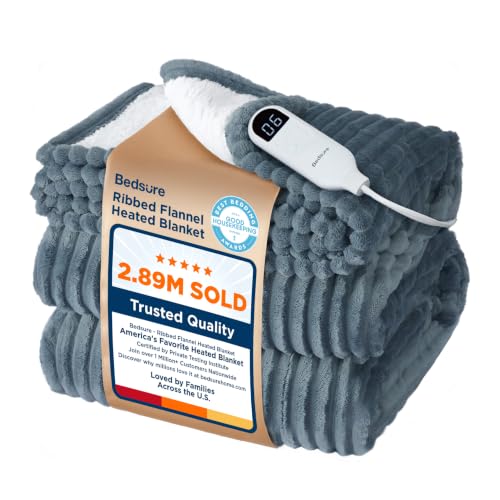
| Bedsure Heated Blanket Throw with Preheat | Best for Energy Saving | 6 | 8 hours | 50×60 inches | Check price |
| Bedsure GentleSoft Heated Blanket Throw | Softest Touch | 6 | 8 hours | 50×60 inches | Check price |
| WEOPEN Heated Electric Blanket King Size | Best for Couples | — | 1-8 hours programmable | 90×100 inches | Check price |
| Westinghouse Heated Car Blanket 12 Volt | Best for Vehicles | 3 | 4 hours | 59×43 inches | Check price |




Top Electric Blankets With Auto Shut Off
Sealy Heated Blanket Electric Throw
- Heat Settings6
- Auto Shut OffYes
- Size50×60 inches
- MaterialFlannel and Sherpa
- Cord Length6 ft
- Rapid heating with pre-heat procedure
- 6 precise heat settings with temperature monitoring
- Reliable auto shut-off and overheat protection
- Soft flannel and sherpa fabric for comfort
- Heavier insulated cord may limit repositioning
- Limited to a throw size, not for large beds
Bedsure Heated Blanket Throw with Preheat
- Heat Settings6
- Auto Shut Off8 hours
- Size50×60 inches
- Power100W
- Multiple timer settings up to 10 hours
- Energy-efficient 100W power rating
- Preheat function for quick warmth
- ETL and FCC certified for safety
- Only one size option (50×60 inches)
- Auto shut-off fixed at 8 hours, no adjustable timer
Bedsure GentleSoft Heated Blanket Throw
- Heat Settings6
- Auto Shut Off8 hours
- Size50×60 inches
- Power100W
- 240 GSM flannel top with 200 GSM sherpa backing
- 6 heat levels and timer settings
- ETL and FCC certified
- Machine washable and durable stitching
- Same size and power as Bedsure preheat model
- No adjustable auto shut-off beyond 8 hours
WEOPEN Heated Electric Blanket King Size
- Heat Settings—
- Auto Shut Off1-8 hours programmable
- Size90×100 inches
- Dual-zone heating with independent controls
- Programmable auto shut-off up to 8 hours
- Large king-size 90×100 inch blanket
- Machine washable with removable controllers
- Requires careful handling to avoid folding or bunching
- No specific power rating provided
Westinghouse Heated Car Blanket 12 Volt
- Heat Settings3
- Auto Shut Off4 hours
- Size59×43 inches
- Power Source12 Volt DC
- 12V car power cord with 85 inch length
- Three heat settings with 4-hour auto shut-off
- Soft double-layer 180 GSM polar fleece
- Machine washable with removable controller
- Not designed for home AC outlets
- Smaller size than standard throws
How to Choose the Right Electric Blanket
Choose the blanket by how you will actually use it. For all-night bed use, look for a full-size heated blanket with auto shut-off and controls made for continuous use; for the sofa or a desk chair, a smaller heated throw is easier to handle and cheaper to run. If you mainly want a couch throw that switches off by itself, see our heated throw blanket auto shut off guide.
For comfort, aim for multiple heat settings and a soft fabric. Three levels is the bare minimum; 5 to 10 steps let you preheat on high, then drop to a low, barely-there warmth that feels more comfortable all night. Plush or sherpa-style fabrics feel warmer at lower settings, which helps if you want the most comfortable electric blanket without running it on max.
Auto shut-off is non‑negotiable for a blanket you might fall asleep under. A timer in the controller cuts power to the heating wires after a set number of hours, which limits overheating and reduces fire risk. For overnight use, choose a model that is labeled for sleeping and offers a long timer (often 8–10 hours); for quick naps or preheating the bed, a 1–4 hour timer is enough.
You can leave an electric blanket on all night only if the manual clearly says it is designed for that and it has a built‑in auto shut-off. Treat any blanket without a timer as a preheater: warm the bed, then switch it off before you sleep. If a blanket arrives without the auto shut-off that was promised in the listing, return it rather than using it as an overnight heater.
Pay close attention to the cord, controller, and instructions. A good blanket has a detachable power cord and control unit that lock firmly into the blanket, with simple buttons you can work in the dark. The tag on the blanket and the manual should show a model number, clear washing instructions, and a phone number or website for customer service, so you can get help or an official replacement control if you ever need one.
| Choice | Best For Bed Use | Best For Couch or Spot Use |
|---|---|---|
| Heat Settings | 5–10 steps so you can preheat high, then drop to a gentle overnight level | 3–6 steps for quick comfort without fuss |
| Auto Shut-Off Timer | Long timer (often 8–10 hours) on a model labeled safe for sleeping | Shorter timer (1–4 hours) to avoid running it all day |
| Cord and Controller | Detachable cord, simple controls you can adjust half-asleep | Detachable cord, compact controller that is easy to reach on the sofa |
Sizing and Heat Output Considerations
Choose a blanket size that matches your bed or seating area. A queen-size blanket covers a queen bed completely, while smaller throws suit chairs or couches.
Wattage indicates how much heat a blanket produces. Most electric blankets use between 60 and 200 watts. Higher wattage means faster and stronger heating but also higher electricity use.
An electric blanket designed to be left on all night will have built-in safety features like auto shut-off and low wattage settings. These reduce fire risk and energy waste.
If you want continuous warmth, look for blankets with a low wattage (around 100 watts) and long auto shut-off timers or a manual off option. This balance keeps you warm safely.
| Size | Typical Wattage | Notes |
|---|---|---|
| Throw or Small | 60 to 100 W | Good for seating areas, lower energy use |
| Twin to Full | 100 to 150 W | Suitable for single sleepers, moderate heat |
| Queen to King | 150 to 200 W | For larger beds, higher heat output |
Safety Features to Look For
Electric blankets with an auto shut-off feature are designed to prevent overheating and reduce fire risk. You can leave these blankets on while you sleep only if the manufacturer explicitly states the model is safe for overnight use. Otherwise, turning off the blanket before bed is the safest choice.
Look for electric blankets certified by ETL or UL. These certifications mean the product meets safety standards for electric heating devices. They ensure the wiring and components have passed rigorous testing.
- Check for CertificationLook for ETL or UL marks on the blanket or its packaging before buying.
- Verify Overheat ProtectionChoose blankets with built-in overheat sensors that cut power if the temperature rises too high.
- Inspect Wiring and MaterialsEnsure the blanket has insulated wiring and a durable outer fabric to resist wear and prevent electrical faults.
Insulated wiring reduces the risk of electric shock and short circuits. Overheat protection often involves a thermostat or thermal fuse that automatically shuts the blanket off if it gets dangerously hot. These features protect both the user and the home.
Energy Efficiency and Running Costs
Electric blankets with auto shut off are among the cheapest ways to stay warm because they heat your body and bedding directly instead of all the air in the room. Most full-size blankets use well under 200 watts on a comfortable setting, while a typical portable space heater pulls about 1,500 watts from the same outlet.
To estimate running cost, take the blanket’s wattage, divide by 1,000 to get kilowatts, multiply by the hours you use it, then multiply by your electricity rate. For example, a 100-watt blanket run for 8 hours uses 100 / 1,000 * 8 = 0.8 kWh; at $0.17 per kWh you would pay 0.8 * 0.17 for that night.
| Appliance | Watts | Per hour | Per day (8 h) | Per month (30 days) |
|---|---|---|---|---|
| 1,500 W space heater | 1,500 W | 26¢ | $2.04 | $61.20 |
| Heated blanket | 100 W | 1.7¢ | 14¢ | $4.08 |
Auto shut off and programmable timers keep costs down by stopping the blanket once your bed is warm instead of running on high for hours. Use the preheat or highest setting for about 20 minutes, then drop to a lower setting or let the sleep mode timer step the heat down so you are not paying for more warmth than you need. If the packaging or online listing mentioned auto shut off but you cannot find any timer or auto-off symbol on the controller or in the manual, assume it does not have that feature and do not leave it running unattended.
For more detail on matching blanket size, wattage, and timers to your bed and budget, see our best electric blanket guide.
Common Misconceptions About Electric Blankets
Electric blankets can feel safe and convenient, but some common myths can lead to unsafe use or confusion. One major question is whether you can leave an electric blanket unattended. Despite auto shut-off features, manufacturers generally advise against leaving electric blankets on and unattended for long periods. Auto shut-off limits risk but does not eliminate it. Use the blanket only when you are awake and able to respond if something goes wrong.
Another frequent concern is whether electric blankets qualify for Health Savings Account (HSA) reimbursement. Electric blankets are not considered medical devices by the IRS, so they do not qualify for HSA or Flexible Spending Account (FSA) use. They are comfort items, not treatments or medical equipment.
Some users believe electric blankets can be left on all night for continuous warmth. Even models designed for overnight use recommend turning off the heat before sleeping or using a low setting with a timer. Continuous use increases the chance of overheating or damage to the blanket’s wiring.
Electric blankets should never be folded, bunched, or tucked tightly while powered on. This can cause hot spots that damage the wires or fabric. Always follow the manufacturer’s instructions for use and storage to maintain safety and durability.
Frequently Asked Questions
Can you leave an electric blanket on all night?
Is it wise to keep the electric blanket on all night?
How long can you leave an electric blanket on?
What effects can leaving your electric blanket on have?
Does electric heated blanket qualify for HSA?
Can electric blankets be left alone?
We cover how weighted blankets help in its own guide.
If that sounds like your room, read up on best electric blankets review next.